
Why "three hours every day" fails
At the start, the enthusiasm is huge and the quota looks doable. The problem is that you plan from the best day of the week, and you still have to live through the worst ones. One missed session turns into guilt, and guilt quickly kills the urge to open the editor.

Energy borrowed at interest
Three hours of drawing after school or work does not come out of nowhere. You take it from sleep and rest. The first days you barely notice. Then the tiredness stacks up. You pay that debt back with weeks of doing nothing.
The first signs of overload
- drawing starts with a sigh, not with interest;
- you count the minutes until the session ends;
- your hands hurt by evening, and the line gets jumpy;
- after the session you feel empty, not satisfied.
If you notice two of the four, lower the minimum today. Do not wait for a crash.
A minimum you can actually hit
The minimum has to be something you can finish on your worst day: short on sleep, after a shift, on the road. Anything past the minimum is a bonus, not a duty.

15 minutes as the base
Fifteen minutes is a real session: five for a warm-up, ten for a small sketch. Over a month that adds up to about seven hours of practice, more than someone who twice sat down for three hours and quit.
The rule that one line still counts
On a truly hard day, open a canvas and draw one line. It sounds silly, and it keeps the streak alive so your brain does not file the day as a skip. The mechanics of these tiny minimums are covered in the guide on a daily drawing habit.
Rotate the work
Burnout usually comes from the same kind of effort, not from the number of hours. If you demand something hard every day, the tank is empty in two weeks.
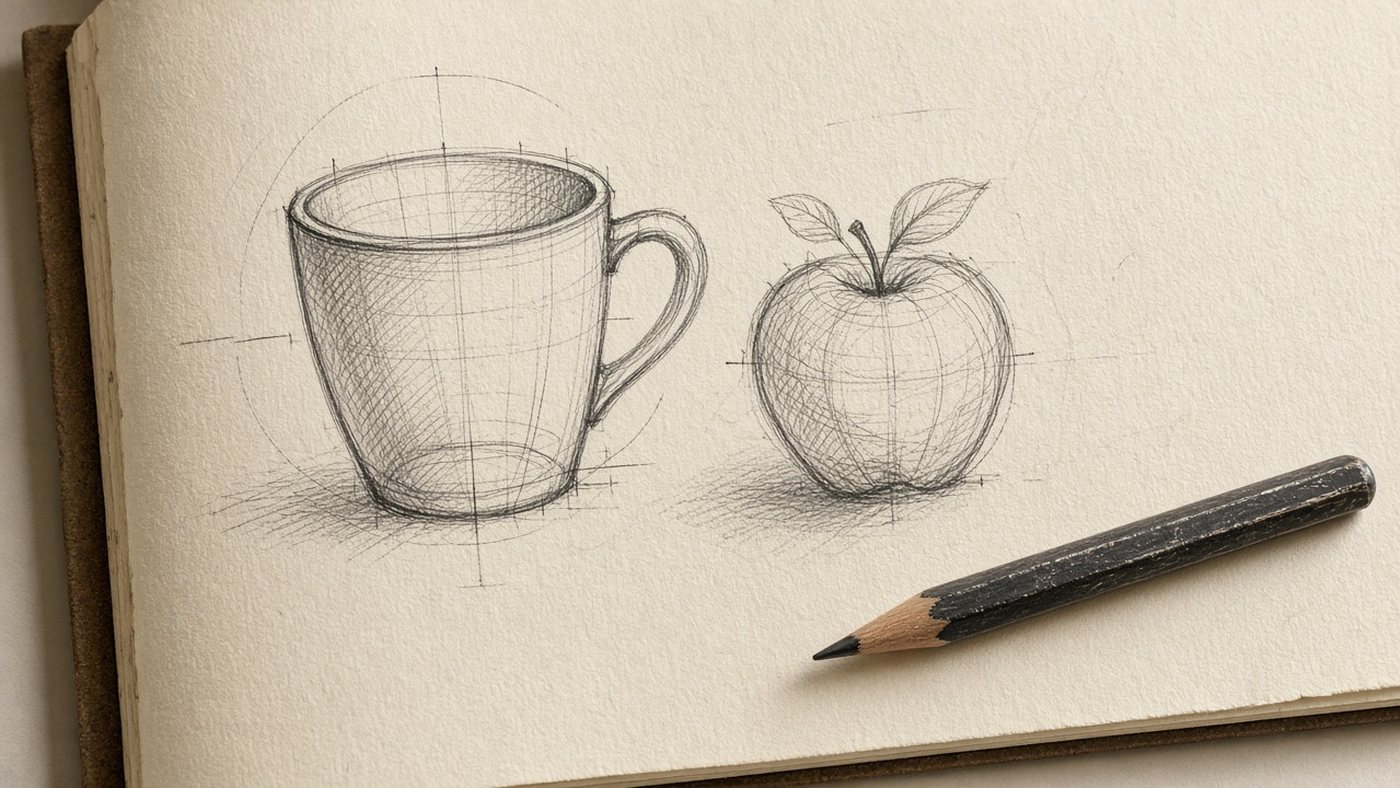
A hard piece and an easy sketch
Build a schedule you can live with: two days a week for serious work, and the rest for quick sketches of 15 minutes. The sketches keep your hand in shape while your head rests.
Days for exercises only
Give one or two days to mechanics, with no creative decisions: lines, ellipses, value scales, blind contour. A ready set is in the collection of warm-up exercises.
Check
Once a week, ask yourself: "If I did not have to draw today, would I want to?" If the answer is no for three weeks running, this is not laziness. The minimum is too high, or the tasks are too hard.
Rest as part of practice
Rest is a required item on the plan, not a prize for finishing it. Skill settles in during the pauses, not during another hour of hatching.
One day a week with no drawing
Pick a fixed day and do not draw at all. On that day, skip other people's work too. Your eyes and your head need quiet.
Change what you take in
Go to a show, watch a film with a strong picture, walk for an hour with no phone. Also check your setup and your breaks. How to set them is covered in the guide on artist ergonomics.
Signs of burnout
Burnout is different from ordinary tiredness. It does not lift after sleep, and it builds slowly.
Irritation at your own work
A finished drawing used to please you for at least half an hour. Now it makes you angry right away, and you want to delete the file. The bar is above your strength. You did not get worse at drawing.
Avoiding the editor
You find ten chores before you open a canvas, and you are glad for any excuse not to draw. If that lasts more than two weeks and spreads into the rest of life, talk to a professional. Tiredness on that scale is rarely only about drawing.
How to come back after a crash
A skip of a week or a month does not erase the skill. Come back gently, or you will repeat the same cycle.
A 5-minute mini task
- Open a 400×400 canvas and one brush, with no setup and no extra layers.
- Set a timer for 5 minutes.
- Draw one simple object from the table: a mug, keys, headphones.
- Close the file without judging the result.
- Repeat that for three days, then add five minutes.
Do not make up the missed days
Do not try to catch up on missed days with a double quota. That is how you land in overload again. Cross the misses off and continue from today. If you want a structure for the return, take the ready 30-day drawing plan and start it on day one.
Time to draw, not just read
Theory fades in a couple of days if you never use it. Open the editor and spend 15 minutes on what you just read. That is enough for the skill to stick.
Try it now
A free online editor: brushes, layers, a palette, and a shared canvas. No install and no sign-up.
Start drawingTopics in this guide
- draw every day
- artist burnout
- how to avoid burnout
- daily drawing practice
- how long to practice
← Fear of the blank page: 7 tricks that actually work 10 creative warm-ups: exercises before you draw →