The Logic of an Invented World
Convincing fantasy rests on rules, not on freedom. A viewer believes a creature when they can see what it eats, how it moves, and where it lives. Invent those answers before you start drawing scales.
One Bold Rule and Its Consequences
Take exactly one assumption and follow it all the way through. For example: in this world gravity is half as strong. Then people are taller and thinner, jumps are longer, buildings are narrower, and bridges stand on thin supports. One rule and five consequences give you more material than a dozen random ideas.
Why Realism in the Details Matters
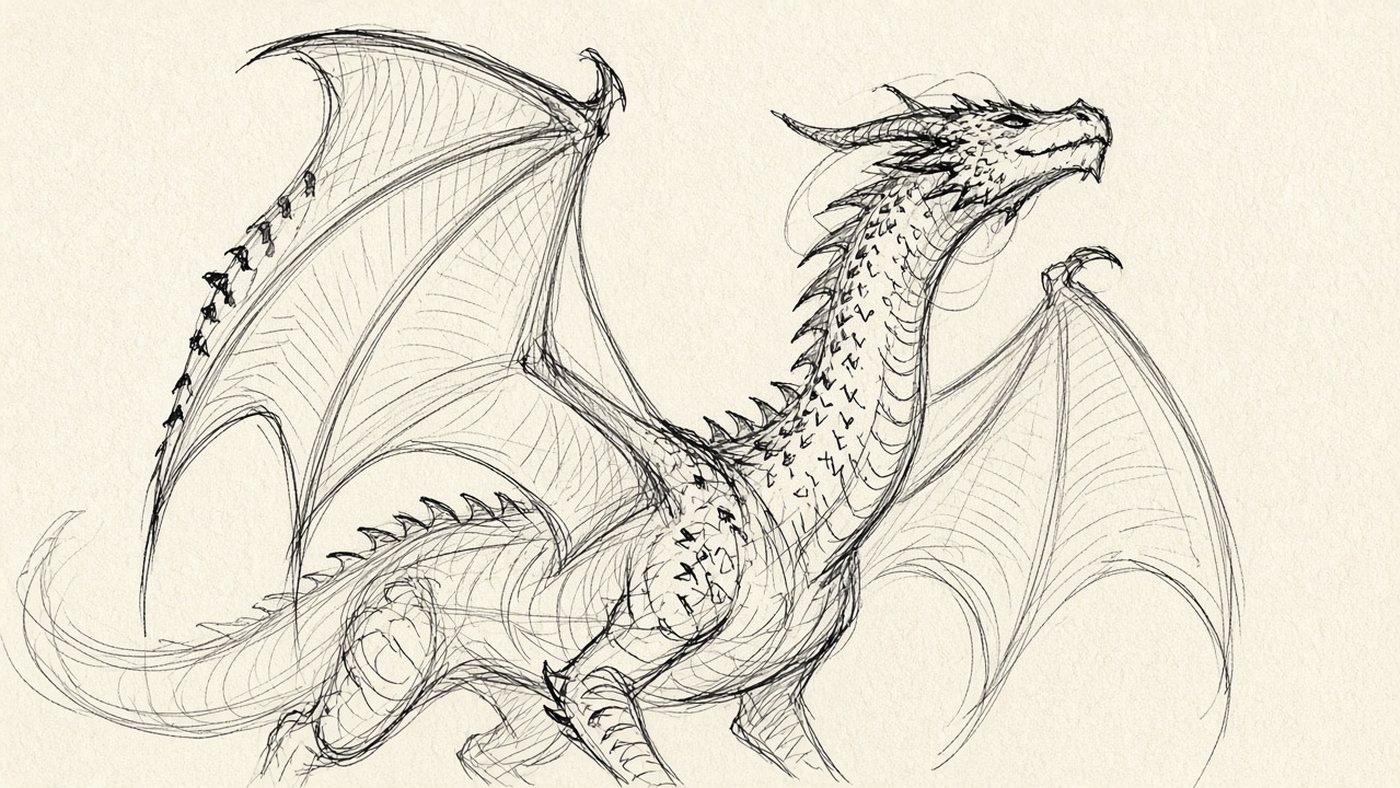
A dragon reads as alive if it has real skin folds at the joints, worn claws, and scars. A fantastic form plus a realistic surface is the working formula of the genre. The stranger the idea, the more believable the small details need to be.
Creature Design
A creature is assembled from parts of familiar animals. It is not invented from nothing. The viewer's brain recognizes those parts and fills in the plausibility on its own.
Cross Real Animals
The order of work on a new creature:
- Pick a base: the animal whose skeleton will carry the design.
- Add a second base for the head or the limbs.
- Take texture from a third: toad skin, a turtle shell, yak fur.
- Draw five silhouettes with different proportions and pick one.
- Check how the creature stands, eats, and defends itself.
- Remove half of the details you invented and finish the ones that remain.
A Silhouette That Reads
Fill the creature solid black and look at it from two meters away. If you can still tell what it is, and it does not turn into a shapeless blob, the silhouette works. Add one strong projection: a horn, a crest, a long tail. That is what makes the creature memorable.
A Job for Every Detail
Every shape needs a reason. A horn is for fighting, so it is worn down on one side. Wings have to lift the body's mass, so their span is two to three times the length of the torso. Glowing spots have to lure something or warn something off.
Shortcut
Before you draw an invented animal, make ten sketches from photos of real ones. Half an hour on a lizard skeleton will do more for a dragon than a week of pure imagination.
Character Design
A character reads in two seconds, and in those seconds the clothes tell you everything. Start with the job and the biography, not with the face.
Job and Personality in the Clothes
Ask yourself where the hero sleeps, what they carry in their pockets, and how they earn a living. A tracker gets a worn cloak, sturdy boots, and a bag with straps. A court mage gets long sleeves, expensive cloth, and no trace of dirt. Material, wear, and patches speak louder than a dramatic cut.
Shape Language: Circle, Square, Triangle
- a circle: a kind, soft, safe character;
- a square: reliable, heavy, stubborn;
- a triangle: fast, dangerous, aggressive;
- a mix of shapes with one clearly in the lead works better than an even split;
- repeat the main shape in the small things: a buckle, a helmet, a pattern on the cloak.
Atmosphere and Setting
The setting explains where the hero came from and makes the picture feel whole. Even a couple of shapes in the background beat an empty fill.
Light Sets the Mood
One light source solves half the problem. Warm, low firelight pushes shadows upward and makes the scene feel cozy. Cool rim light from behind turns the figure into a dark silhouette and adds unease. How light zones are built is covered in the guide on light and shadow.
Scale Through a Human Figure
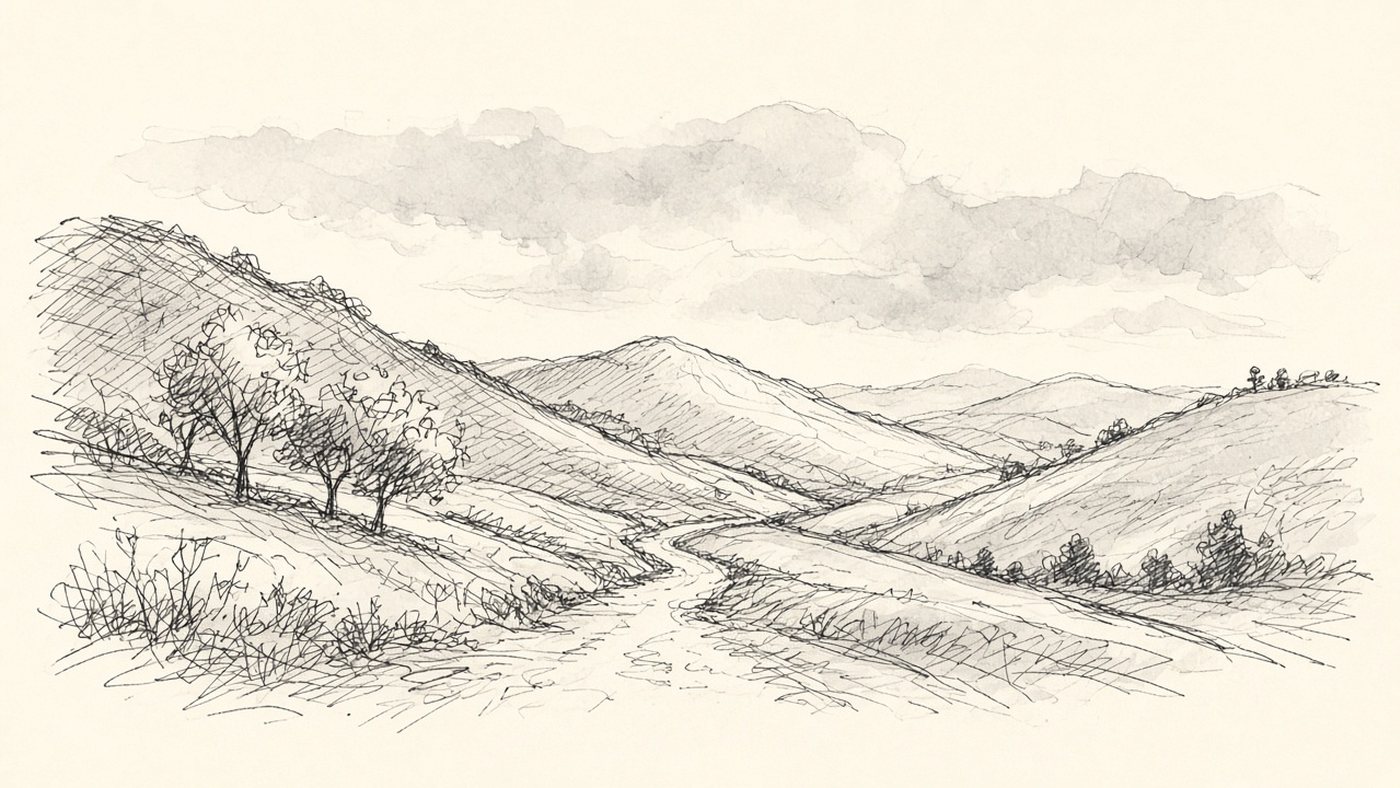
A viewer reads the size of a tower, a tree, or a creature only from a familiar object next to it. Put a small human figure at the base, and a mountain becomes a mountain. Add two or three planes at different levels of sharpness so depth appears. Background methods are collected in the breakdown on how to draw a landscape.
Working from Reference
Concept artists do not keep everything in their heads. They keep folders. A reference saves hours and removes mistakes you would not have noticed.
A Folder by Topic
Make subfolders: animal anatomy, cloth and seams, armor, architecture, light and atmosphere. Put photographs in them, not other people's drawings. Before you work, open three to five pictures and keep them next to the canvas. How to break a photo into forms is shown in the article on drawing from reference.
How to Avoid Copying Someone Else's Design
One source is dangerous: you end up retelling it. Mix at least three, and add your own assumption from the first section. It helps to look at someone else's work, write down in words which decision you liked, then close it and draw from the note. The limits of what is allowed are covered in the guide on copying other artists.
Time to draw, not just read
Theory fades in a couple of days if you never use it. Open the editor and spend 15 minutes on what you just read. That is enough for the skill to stick.
Try it now
A free online editor: brushes, layers, a palette, and a shared canvas. No install and no sign-up.
Start drawingTopics in this guide
- fantasy art
- how to draw fantasy
- character design
- invent a creature
- concept art for beginners
← How to Draw Anime: From Building the Face to a Finished Character Sketching for Beginners: How to Make Quick Sketches →