
Where insecurity comes from
Insecurity in your drawing is rarely about missing talent. More often it is comparing yourself to the top of the feed, a pile of unfinished files, and the habit of devaluing work before anyone else sees it. Confidence grows not from mirror affirmations but from a list of finished pieces and honest feedback on one point.
If you apologize in every caption, you invite harsh judgment upfront. You can still be learning and not cut the work to zero before you show it.
Comparing yourself to the top of the feed
The feed is a year of curation and best frames. On your desk is today's draft. The comparison is unfair by definition. Limit scrolling before a session and compare yourself to yourself a month ago—that is closer to real progress.
Unfinished work
A folder of "almost done" gives no sense of growth: zero wins in your head. Finished work, even simple, supports self-esteem more than a perfect sketch you are afraid to touch. The "good enough" rule helps in perfectionism in drawing.
Caption language
The caption sets the frame people read the work in. "Don't judge too harshly" sounds like asking for a verdict. "Tried a new palette" is a fact and an invite to talk specifics.
A fact instead of an apology
One process fact: time, task, what you tried. No "I'm a beginner," no "this is awful." The viewer decides like or not—you do not owe an apology for learning.
One question instead of "rate this"
Instead of "what do you think?"—"does the back silhouette read?" or "is the face tone too flat?" You get useful answers, not a score, and you do not feed fear of critique. Taking notes without collapse is in how to take critique.
- apology: "sorry for the crooked hands";
- fact: "20 minutes, reference from my photo";
- rating ask: "good or not?";
- question: "can you read the floor perspective?"
Small wins
Confidence stacks from small finishes, not one future masterpiece. The more closed files with dates, the calmer the next show.
Finish something small
Once a week finish something in 20–40 minutes: sketch, icon, one character. Criterion—"clear what was drawn," not "museum level." That rhythm also supports a daily drawing habit.
An archive of completed work
A "done 2026" folder with only finished files. On a bad day open it: the list proves you already know how to finish. That is a different conversation with your brain than a folder of abandoned sketches.
Check
Count pieces you showed at least one person in the last two months. If zero—insecurity makes sense: you are not training the show. Next step: one friend, one piece, one specific question.
A safe circle
Jumping straight into comments under someone else's post with "rate mine" is a harsh entry. Confidence builds in steps: trusted person, small chat, then a wider audience.
Friend → chat → public post
First a friend or practice partner. Then a course chat or private channel of ten people. Then an open post. Stay on each step until it stops feeling like panic.
Do not jump straight into comments
Public comments under others' work are often harsher than a direct message. Do not use them as a first exam. A fuller take on audience fear is in the fear of sharing your art.
Confidence from skill
Psychology without practice deflates fast. Repeating one task and a progress journal give footing that does not depend on likes.
Repeat one task
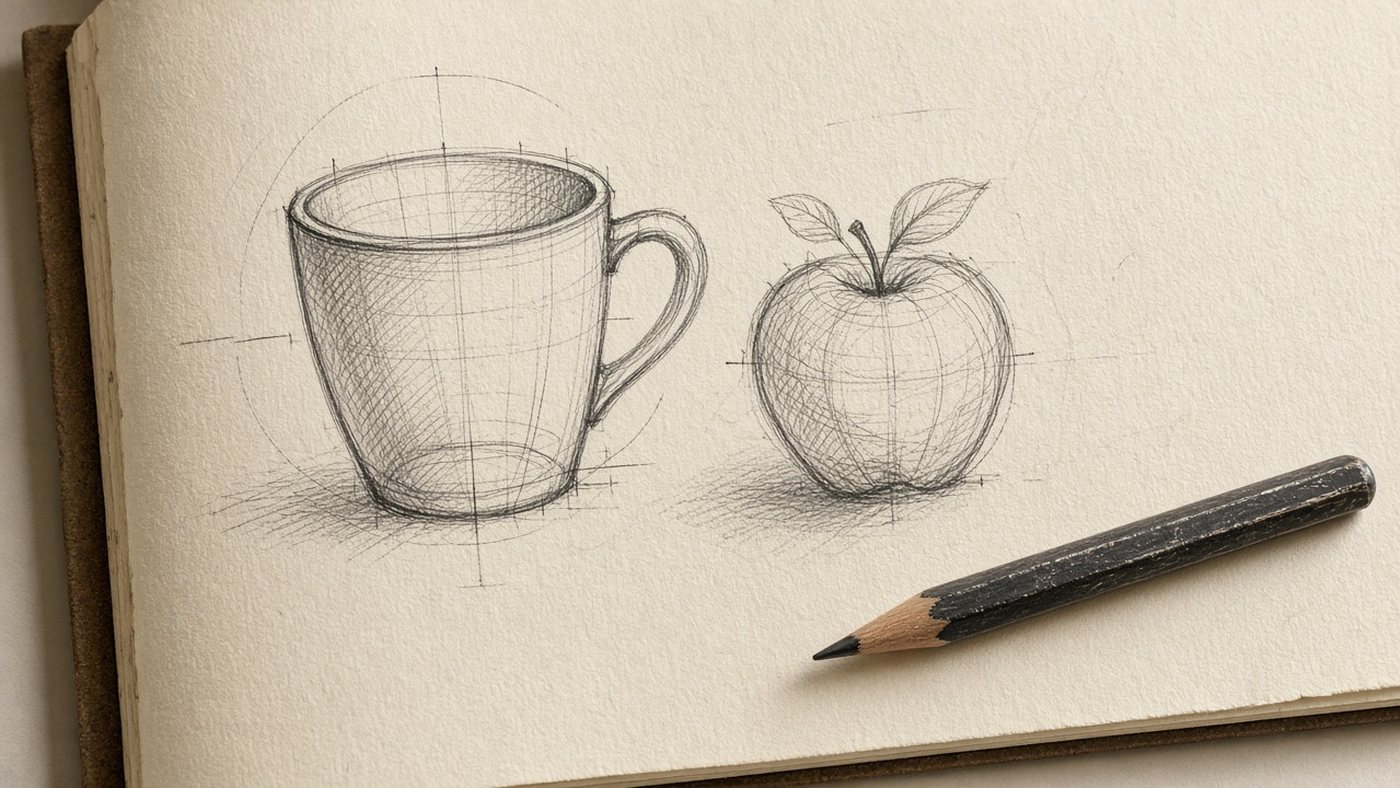
Draw the same simple subject ten times: cup, profile, hand. Compare first and tenth. Confidence here is "I know how this works," not "I am a genius."
A progress journal
Once a week one line: what worked, what to study next. Reread in two months—insecurity often forgets facts. Goals and support are also in drawing motivation.
- Before posting replace the apology in the caption with one fact.
- Finish one small piece this week and put it in the "done" archive.
- Show it to one person with one specific question.
- Do not delete the work in the first 24 hours after showing—let yourself cool off.
Time to draw, not just read
Theory fades in a couple of days if you never use it. Open the editor and spend 15 minutes on what you just read. That is enough for the skill to stick.
Try it now
A free online editor: brushes, layers, a palette, and a shared canvas. No install and no sign-up.
Start drawingTopics in this guide
- confidence in your drawing
- insecure artist
- afraid to show your art
- artist self-esteem
- finishing drawings
← Art envy: a signal, not a verdict Sharing art on social media: posting without burnout →