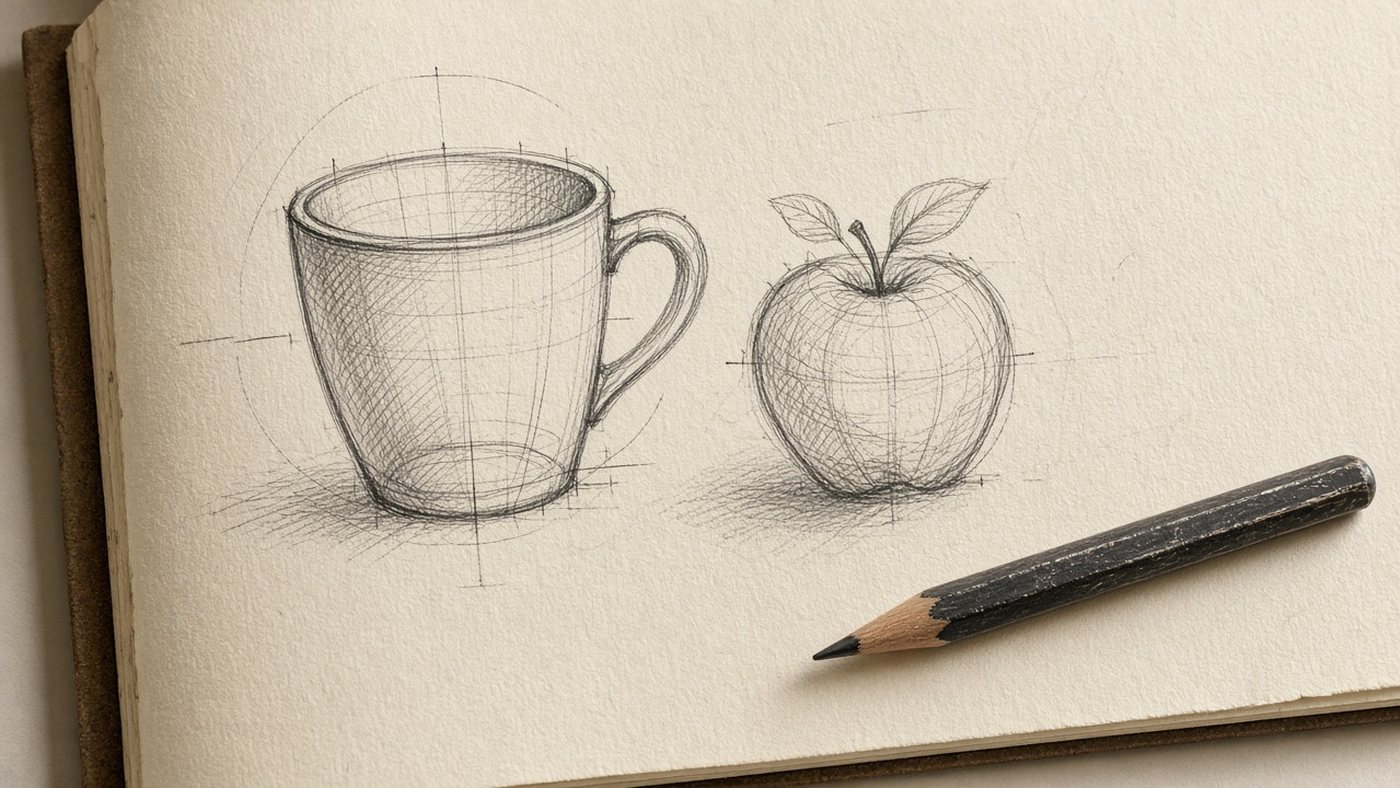
Backpack kit
A5 sketchbook
A5 is the travel sweet spot: fits a shoulder bag, large enough for a scene, small enough that white paper does not intimidate. A4 in wind and crowds needs clips, a table, time.
Choose 120–160 gsm if you might use marker or light watercolor; graphite-only can use office paper with possible show-through. Spiral or wire binding lies flat on knees better than hardcover.
Keep the book in a top pocket or sleeve — every minute hunting kills "stop and sketch." A student's book lived under a jacket for three travel days; he never opened it though he "really wanted to sketch."
Digital analog: one "travel" A5 preset in your editor — but battery and offline are their own chapter. Paper does not die or glare in sun.
Do not postpone practice until conditions are perfect. You can improve a5 sketchbook gradually, but light, a clear desk, and a time agreement should work today — modestly, without debt.
Leave a one-week before/after note: what changed in the process, not only on the page. That makes "a5 sketchbook" easier to discuss without slogans.
Before the next session, ask: "What blocked a5 sketchbook last time?" Write one sentence on a sticky note or layer name — remove that barrier before you quit again.
On day 28, "a5 sketchbook" is not a verdict — it is maintenance. Five minutes today beats a new plan tomorrow.
If shame shows up around "a5 sketchbook", shrink the audience to yourself or one friend. Shame grows in public; protocols grow in private.
Students who survive month one treat "a5 sketchbook" as repeatable, not heroic. Repeatable wins.
Two pencils
"Two pencils" under "Backpack kit" is part of travel sketching as memory, not a perfect album — kit, time limits, and ethics. I start with what you can do tonight, not with a fantasy studio.
A practical test for "Two pencils": a 15–25 minute session should not include hunting for tools, moving furniture, or arguing at home. If it does, fix the setup before you blame "no talent."
When "Two pencils" feels broken, fatigue and an unrealistic quota are the usual suspects — not a missing gift. Shrink the task to one page or one layer for three days; the picture often changes faster than a new purchase.
Related reading: file organization for artists. I keep this page focused on how two pencils fits your room, budget, and schedule.
Do not postpone practice until conditions are perfect. You can improve two pencils gradually, but light, a clear desk, and a time agreement should work today — modestly, without debt.
Leave a one-week before/after note: what changed in the process, not only on the page. That makes "two pencils" easier to discuss without slogans.
Before the next session, ask: "What blocked two pencils last time?" Write one sentence on a sticky note or layer name — remove that barrier before you quit again.
On day 28, "two pencils" is not a verdict — it is maintenance. Five minutes today beats a new plan tomorrow.
If shame shows up around "two pencils", shrink the audience to yourself or one friend. Shame grows in public; protocols grow in private.
Students who survive month one treat "two pencils" as repeatable, not heroic. Repeatable wins.
Mini watercolor optional
"Mini watercolor optional" under "Backpack kit" is part of travel sketching as memory, not a perfect album — kit, time limits, and ethics. I start with what you can do tonight, not with a fantasy studio.
A practical test for "Mini watercolor optional": a 15–25 minute session should not include hunting for tools, moving furniture, or arguing at home. If it does, fix the setup before you blame "no talent."
When "Mini watercolor optional" feels broken, fatigue and an unrealistic quota are the usual suspects — not a missing gift. Shrink the task to one page or one layer for three days; the picture often changes faster than a new purchase.
Related reading: artist portfolio. I keep this page focused on how mini watercolor optional fits your room, budget, and schedule.
Do not postpone practice until conditions are perfect. You can improve mini watercolor optional gradually, but light, a clear desk, and a time agreement should work today — modestly, without debt.
Leave a one-week before/after note: what changed in the process, not only on the page. That makes "mini watercolor optional" easier to discuss without slogans.
Before the next session, ask: "What blocked mini watercolor optional last time?" Write one sentence on a sticky note or layer name — remove that barrier before you quit again.
On day 28, "mini watercolor optional" is not a verdict — it is maintenance. Five minutes today beats a new plan tomorrow.
If shame shows up around "mini watercolor optional", shrink the audience to yourself or one friend. Shame grows in public; protocols grow in private.
Students who survive month one treat "mini watercolor optional" as repeatable, not heroic. Repeatable wins.
15-minute protocol
Silhouette
First five minutes: big silhouette only, no detail. Tower, tree, person — cut-out shapes. If the silhouette reads, viewers care; detail is bonus.
Squint or soften focus so windows and ornament drop away. Urban sketchers call it "big shapes first"; I say "bags before seams."
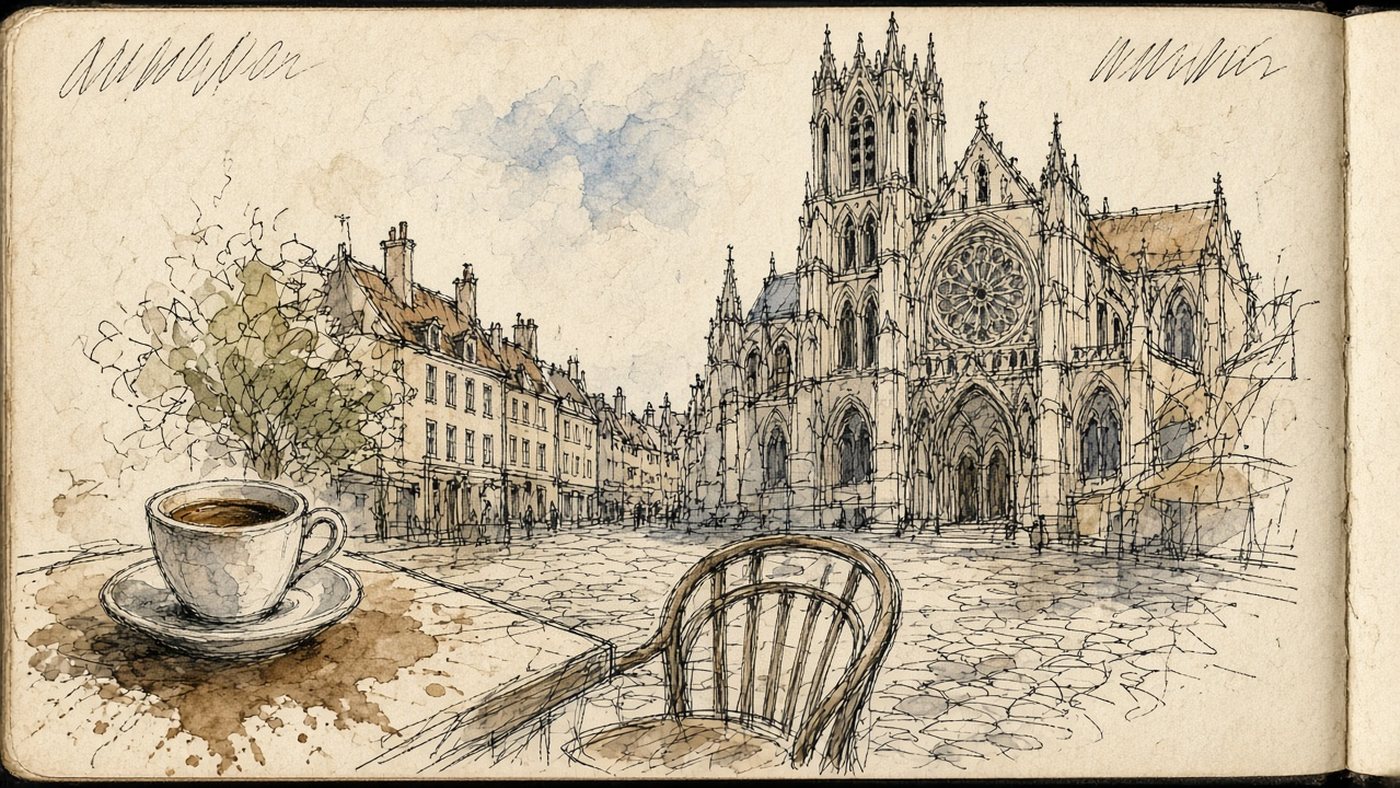
When the bus honks, silhouette saves you. I have a cathedral sketch: three trapezoids and a triangle — still reads as the trip because date and city are signed.
Silhouette also blocks perfectionism. You literally cannot draw every window in fifteen minutes — and that is fine.
Do not postpone practice until conditions are perfect. You can improve silhouette gradually, but light, a clear desk, and a time agreement should work today — modestly, without debt.
Leave a one-week before/after note: what changed in the process, not only on the page. That makes "silhouette" easier to discuss without slogans.
Before the next session, ask: "What blocked silhouette last time?" Write one sentence on a sticky note or layer name — remove that barrier before you quit again.
On day 28, "silhouette" is not a verdict — it is maintenance. Five minutes today beats a new plan tomorrow.
If shame shows up around "silhouette", shrink the audience to yourself or one friend. Shame grows in public; protocols grow in private.
Students who survive month one treat "silhouette" as repeatable, not heroic. Repeatable wins.
One color accent
"One color accent" under "15-minute protocol" is part of travel sketching as memory, not a perfect album — kit, time limits, and ethics. I start with what you can do tonight, not with a fantasy studio.
A practical test for "One color accent": a 15–25 minute session should not include hunting for tools, moving furniture, or arguing at home. If it does, fix the setup before you blame "no talent."
When "One color accent" feels broken, fatigue and an unrealistic quota are the usual suspects — not a missing gift. Shrink the task to one page or one layer for three days; the picture often changes faster than a new purchase.
Related reading: how to draw cities. I keep this page focused on how one color accent fits your room, budget, and schedule.
Do not postpone practice until conditions are perfect. You can improve one color accent gradually, but light, a clear desk, and a time agreement should work today — modestly, without debt.
Leave a one-week before/after note: what changed in the process, not only on the page. That makes "one color accent" easier to discuss without slogans.
Before the next session, ask: "What blocked one color accent last time?" Write one sentence on a sticky note or layer name — remove that barrier before you quit again.
On day 28, "one color accent" is not a verdict — it is maintenance. Five minutes today beats a new plan tomorrow.
If shame shows up around "one color accent", shrink the audience to yourself or one friend. Shame grows in public; protocols grow in private.
Students who survive month one treat "one color accent" as repeatable, not heroic. Repeatable wins.
Date caption
"Date caption" under "15-minute protocol" is part of travel sketching as memory, not a perfect album — kit, time limits, and ethics. I start with what you can do tonight, not with a fantasy studio.
A practical test for "Date caption": a 15–25 minute session should not include hunting for tools, moving furniture, or arguing at home. If it does, fix the setup before you blame "no talent."
When "Date caption" feels broken, fatigue and an unrealistic quota are the usual suspects — not a missing gift. Shrink the task to one page or one layer for three days; the picture often changes faster than a new purchase.
Related reading: drawing on your phone. I keep this page focused on how date caption fits your room, budget, and schedule.
Do not postpone practice until conditions are perfect. You can improve date caption gradually, but light, a clear desk, and a time agreement should work today — modestly, without debt.
Leave a one-week before/after note: what changed in the process, not only on the page. That makes "date caption" easier to discuss without slogans.
Before the next session, ask: "What blocked date caption last time?" Write one sentence on a sticky note or layer name — remove that barrier before you quit again.
On day 28, "date caption" is not a verdict — it is maintenance. Five minutes today beats a new plan tomorrow.
If shame shows up around "date caption", shrink the audience to yourself or one friend. Shame grows in public; protocols grow in private.
Students who survive month one treat "date caption" as repeatable, not heroic. Repeatable wins.
People and ethics
No hidden photos
"No hidden photos" under "People and ethics" is part of travel sketching as memory, not a perfect album — kit, time limits, and ethics. I start with what you can do tonight, not with a fantasy studio.
A practical test for "No hidden photos": a 15–25 minute session should not include hunting for tools, moving furniture, or arguing at home. If it does, fix the setup before you blame "no talent."
When "No hidden photos" feels broken, fatigue and an unrealistic quota are the usual suspects — not a missing gift. Shrink the task to one page or one layer for three days; the picture often changes faster than a new purchase.
Related reading: drawing in an online editor. I keep this page focused on how no hidden photos fits your room, budget, and schedule.
Do not postpone practice until conditions are perfect. You can improve no hidden photos gradually, but light, a clear desk, and a time agreement should work today — modestly, without debt.
Leave a one-week before/after note: what changed in the process, not only on the page. That makes "no hidden photos" easier to discuss without slogans.
Before the next session, ask: "What blocked no hidden photos last time?" Write one sentence on a sticky note or layer name — remove that barrier before you quit again.
On day 28, "no hidden photos" is not a verdict — it is maintenance. Five minutes today beats a new plan tomorrow.
If shame shows up around "no hidden photos", shrink the audience to yourself or one friend. Shame grows in public; protocols grow in private.
Students who survive month one treat "no hidden photos" as repeatable, not heroic. Repeatable wins.
Museum rules
"Museum rules" under "People and ethics" is part of travel sketching as memory, not a perfect album — kit, time limits, and ethics. I start with what you can do tonight, not with a fantasy studio.
A practical test for "Museum rules": a 15–25 minute session should not include hunting for tools, moving furniture, or arguing at home. If it does, fix the setup before you blame "no talent."
When "Museum rules" feels broken, fatigue and an unrealistic quota are the usual suspects — not a missing gift. Shrink the task to one page or one layer for three days; the picture often changes faster than a new purchase.
Related reading: digital sketchbook. I keep this page focused on how museum rules fits your room, budget, and schedule.
Do not postpone practice until conditions are perfect. You can improve museum rules gradually, but light, a clear desk, and a time agreement should work today — modestly, without debt.
Leave a one-week before/after note: what changed in the process, not only on the page. That makes "museum rules" easier to discuss without slogans.
Before the next session, ask: "What blocked museum rules last time?" Write one sentence on a sticky note or layer name — remove that barrier before you quit again.
On day 28, "museum rules" is not a verdict — it is maintenance. Five minutes today beats a new plan tomorrow.
If shame shows up around "museum rules", shrink the audience to yourself or one friend. Shame grows in public; protocols grow in private.
Students who survive month one treat "museum rules" as repeatable, not heroic. Repeatable wins.
Cafés
"Cafés" under "People and ethics" is part of travel sketching as memory, not a perfect album — kit, time limits, and ethics. I start with what you can do tonight, not with a fantasy studio.
A practical test for "Cafés": a 15–25 minute session should not include hunting for tools, moving furniture, or arguing at home. If it does, fix the setup before you blame "no talent."
When "Cafés" feels broken, fatigue and an unrealistic quota are the usual suspects — not a missing gift. Shrink the task to one page or one layer for three days; the picture often changes faster than a new purchase.
Related reading: file organization for artists. I keep this page focused on how cafés fits your room, budget, and schedule.
Do not postpone practice until conditions are perfect. You can improve cafés gradually, but light, a clear desk, and a time agreement should work today — modestly, without debt.
Leave a one-week before/after note: what changed in the process, not only on the page. That makes "cafés" easier to discuss without slogans.
Before the next session, ask: "What blocked cafés last time?" Write one sentence on a sticky note or layer name — remove that barrier before you quit again.
On day 28, "cafés" is not a verdict — it is maintenance. Five minutes today beats a new plan tomorrow.
If shame shows up around "cafés", shrink the audience to yourself or one friend. Shame grows in public; protocols grow in private.
Students who survive month one treat "cafés" as repeatable, not heroic. Repeatable wins.
Weather and light
Shade under an awning
"Shade under an awning" under "Weather and light" is part of travel sketching as memory, not a perfect album — kit, time limits, and ethics. I start with what you can do tonight, not with a fantasy studio.
A practical test for "Shade under an awning": a 15–25 minute session should not include hunting for tools, moving furniture, or arguing at home. If it does, fix the setup before you blame "no talent."
When "Shade under an awning" feels broken, fatigue and an unrealistic quota are the usual suspects — not a missing gift. Shrink the task to one page or one layer for three days; the picture often changes faster than a new purchase.
Related reading: artist portfolio. I keep this page focused on how shade under an awning fits your room, budget, and schedule.
Do not postpone practice until conditions are perfect. You can improve shade under an awning gradually, but light, a clear desk, and a time agreement should work today — modestly, without debt.
Leave a one-week before/after note: what changed in the process, not only on the page. That makes "shade under an awning" easier to discuss without slogans.
Before the next session, ask: "What blocked shade under an awning last time?" Write one sentence on a sticky note or layer name — remove that barrier before you quit again.
On day 28, "shade under an awning" is not a verdict — it is maintenance. Five minutes today beats a new plan tomorrow.
If shame shows up around "shade under an awning", shrink the audience to yourself or one friend. Shame grows in public; protocols grow in private.
Students who survive month one treat "shade under an awning" as repeatable, not heroic. Repeatable wins.
Rain
"Rain" under "Weather and light" is part of travel sketching as memory, not a perfect album — kit, time limits, and ethics. I start with what you can do tonight, not with a fantasy studio.
A practical test for "Rain": a 15–25 minute session should not include hunting for tools, moving furniture, or arguing at home. If it does, fix the setup before you blame "no talent."
When "Rain" feels broken, fatigue and an unrealistic quota are the usual suspects — not a missing gift. Shrink the task to one page or one layer for three days; the picture often changes faster than a new purchase.
Related reading: sketching for beginners. I keep this page focused on how rain fits your room, budget, and schedule.
Do not postpone practice until conditions are perfect. You can improve rain gradually, but light, a clear desk, and a time agreement should work today — modestly, without debt.
Leave a one-week before/after note: what changed in the process, not only on the page. That makes "rain" easier to discuss without slogans.
Before the next session, ask: "What blocked rain last time?" Write one sentence on a sticky note or layer name — remove that barrier before you quit again.
On day 28, "rain" is not a verdict — it is maintenance. Five minutes today beats a new plan tomorrow.
If shame shows up around "rain", shrink the audience to yourself or one friend. Shame grows in public; protocols grow in private.
Students who survive month one treat "rain" as repeatable, not heroic. Repeatable wins.
Evening streetlight
"Evening streetlight" under "Weather and light" is part of travel sketching as memory, not a perfect album — kit, time limits, and ethics. I start with what you can do tonight, not with a fantasy studio.
A practical test for "Evening streetlight": a 15–25 minute session should not include hunting for tools, moving furniture, or arguing at home. If it does, fix the setup before you blame "no talent."
When "Evening streetlight" feels broken, fatigue and an unrealistic quota are the usual suspects — not a missing gift. Shrink the task to one page or one layer for three days; the picture often changes faster than a new purchase.
Related reading: how to draw cities. I keep this page focused on how evening streetlight fits your room, budget, and schedule.
Do not postpone practice until conditions are perfect. You can improve evening streetlight gradually, but light, a clear desk, and a time agreement should work today — modestly, without debt.
Leave a one-week before/after note: what changed in the process, not only on the page. That makes "evening streetlight" easier to discuss without slogans.
Before the next session, ask: "What blocked evening streetlight last time?" Write one sentence on a sticky note or layer name — remove that barrier before you quit again.
On day 28, "evening streetlight" is not a verdict — it is maintenance. Five minutes today beats a new plan tomorrow.
If shame shows up around "evening streetlight", shrink the audience to yourself or one friend. Shame grows in public; protocols grow in private.
Students who survive month one treat "evening streetlight" as repeatable, not heroic. Repeatable wins.
Digital on the road
Tablet and offline
"Tablet and offline" under "Digital on the road" is part of travel sketching as memory, not a perfect album — kit, time limits, and ethics. I start with what you can do tonight, not with a fantasy studio.
A practical test for "Tablet and offline": a 15–25 minute session should not include hunting for tools, moving furniture, or arguing at home. If it does, fix the setup before you blame "no talent."
When "Tablet and offline" feels broken, fatigue and an unrealistic quota are the usual suspects — not a missing gift. Shrink the task to one page or one layer for three days; the picture often changes faster than a new purchase.
Related reading: drawing on your phone. I keep this page focused on how tablet and offline fits your room, budget, and schedule.
Do not postpone practice until conditions are perfect. You can improve tablet and offline gradually, but light, a clear desk, and a time agreement should work today — modestly, without debt.
Leave a one-week before/after note: what changed in the process, not only on the page. That makes "tablet and offline" easier to discuss without slogans.
Before the next session, ask: "What blocked tablet and offline last time?" Write one sentence on a sticky note or layer name — remove that barrier before you quit again.
On day 28, "tablet and offline" is not a verdict — it is maintenance. Five minutes today beats a new plan tomorrow.
If shame shows up around "tablet and offline", shrink the audience to yourself or one friend. Shame grows in public; protocols grow in private.
Students who survive month one treat "tablet and offline" as repeatable, not heroic. Repeatable wins.
Browser on your phone
"Browser on your phone" under "Digital on the road" is part of travel sketching as memory, not a perfect album — kit, time limits, and ethics. I start with what you can do tonight, not with a fantasy studio.
A practical test for "Browser on your phone": a 15–25 minute session should not include hunting for tools, moving furniture, or arguing at home. If it does, fix the setup before you blame "no talent."
When "Browser on your phone" feels broken, fatigue and an unrealistic quota are the usual suspects — not a missing gift. Shrink the task to one page or one layer for three days; the picture often changes faster than a new purchase.
Related reading: drawing in an online editor. I keep this page focused on how browser on your phone fits your room, budget, and schedule.
Do not postpone practice until conditions are perfect. You can improve browser on your phone gradually, but light, a clear desk, and a time agreement should work today — modestly, without debt.
Leave a one-week before/after note: what changed in the process, not only on the page. That makes "browser on your phone" easier to discuss without slogans.
Before the next session, ask: "What blocked browser on your phone last time?" Write one sentence on a sticky note or layer name — remove that barrier before you quit again.
On day 28, "browser on your phone" is not a verdict — it is maintenance. Five minutes today beats a new plan tomorrow.
If shame shows up around "browser on your phone", shrink the audience to yourself or one friend. Shame grows in public; protocols grow in private.
Students who survive month one treat "browser on your phone" as repeatable, not heroic. Repeatable wins.
Backup
"Backup" under "Digital on the road" is part of travel sketching as memory, not a perfect album — kit, time limits, and ethics. I start with what you can do tonight, not with a fantasy studio.
A practical test for "Backup": a 15–25 minute session should not include hunting for tools, moving furniture, or arguing at home. If it does, fix the setup before you blame "no talent."
When "Backup" feels broken, fatigue and an unrealistic quota are the usual suspects — not a missing gift. Shrink the task to one page or one layer for three days; the picture often changes faster than a new purchase.
Related reading: digital sketchbook. I keep this page focused on how backup fits your room, budget, and schedule.
Do not postpone practice until conditions are perfect. You can improve backup gradually, but light, a clear desk, and a time agreement should work today — modestly, without debt.
Leave a one-week before/after note: what changed in the process, not only on the page. That makes "backup" easier to discuss without slogans.
Before the next session, ask: "What blocked backup last time?" Write one sentence on a sticky note or layer name — remove that barrier before you quit again.
On day 28, "backup" is not a verdict — it is maintenance. Five minutes today beats a new plan tomorrow.
If shame shows up around "backup", shrink the audience to yourself or one friend. Shame grows in public; protocols grow in private.
Students who survive month one treat "backup" as repeatable, not heroic. Repeatable wins.
After the trip
Scan
"Scan" under "After the trip" is part of travel sketching as memory, not a perfect album — kit, time limits, and ethics. I start with what you can do tonight, not with a fantasy studio.
A practical test for "Scan": a 15–25 minute session should not include hunting for tools, moving furniture, or arguing at home. If it does, fix the setup before you blame "no talent."
When "Scan" feels broken, fatigue and an unrealistic quota are the usual suspects — not a missing gift. Shrink the task to one page or one layer for three days; the picture often changes faster than a new purchase.
Related reading: file organization for artists. I keep this page focused on how scan fits your room, budget, and schedule.
Do not postpone practice until conditions are perfect. You can improve scan gradually, but light, a clear desk, and a time agreement should work today — modestly, without debt.
Leave a one-week before/after note: what changed in the process, not only on the page. That makes "scan" easier to discuss without slogans.
Before the next session, ask: "What blocked scan last time?" Write one sentence on a sticky note or layer name — remove that barrier before you quit again.
On day 28, "scan" is not a verdict — it is maintenance. Five minutes today beats a new plan tomorrow.
If shame shows up around "scan", shrink the audience to yourself or one friend. Shame grows in public; protocols grow in private.
Students who survive month one treat "scan" as repeatable, not heroic. Repeatable wins.
One large page at home
"One large page at home" under "After the trip" is part of travel sketching as memory, not a perfect album — kit, time limits, and ethics. I start with what you can do tonight, not with a fantasy studio.
A practical test for "One large page at home": a 15–25 minute session should not include hunting for tools, moving furniture, or arguing at home. If it does, fix the setup before you blame "no talent."
When "One large page at home" feels broken, fatigue and an unrealistic quota are the usual suspects — not a missing gift. Shrink the task to one page or one layer for three days; the picture often changes faster than a new purchase.
Related reading: artist portfolio. I keep this page focused on how one large page at home fits your room, budget, and schedule.
Do not postpone practice until conditions are perfect. You can improve one large page at home gradually, but light, a clear desk, and a time agreement should work today — modestly, without debt.
Leave a one-week before/after note: what changed in the process, not only on the page. That makes "one large page at home" easier to discuss without slogans.
Before the next session, ask: "What blocked one large page at home last time?" Write one sentence on a sticky note or layer name — remove that barrier before you quit again.
On day 28, "one large page at home" is not a verdict — it is maintenance. Five minutes today beats a new plan tomorrow.
If shame shows up around "one large page at home", shrink the audience to yourself or one friend. Shame grows in public; protocols grow in private.
Students who survive month one treat "one large page at home" as repeatable, not heroic. Repeatable wins.
Travel portfolio
"Travel portfolio" under "After the trip" is part of travel sketching as memory, not a perfect album — kit, time limits, and ethics. I start with what you can do tonight, not with a fantasy studio.
A practical test for "Travel portfolio": a 15–25 minute session should not include hunting for tools, moving furniture, or arguing at home. If it does, fix the setup before you blame "no talent."
When "Travel portfolio" feels broken, fatigue and an unrealistic quota are the usual suspects — not a missing gift. Shrink the task to one page or one layer for three days; the picture often changes faster than a new purchase.
Related reading: sketching for beginners. I keep this page focused on how travel portfolio fits your room, budget, and schedule.
Do not postpone practice until conditions are perfect. You can improve travel portfolio gradually, but light, a clear desk, and a time agreement should work today — modestly, without debt.
Leave a one-week before/after note: what changed in the process, not only on the page. That makes "travel portfolio" easier to discuss without slogans.
Before the next session, ask: "What blocked travel portfolio last time?" Write one sentence on a sticky note or layer name — remove that barrier before you quit again.
On day 28, "travel portfolio" is not a verdict — it is maintenance. Five minutes today beats a new plan tomorrow.
If shame shows up around "travel portfolio", shrink the audience to yourself or one friend. Shame grows in public; protocols grow in private.
Students who survive month one treat "travel portfolio" as repeatable, not heroic. Repeatable wins.
- A5 in the top pocket beats A4 in the wind;
- two pencils cover most travel scenes;
- silhouette first, details optional;
- date + city on the page is half the memory;
- scan before you fly home.
15 minutes
When the bus honks, close on the silhouette. A crooked spire with a date beats a perfect photo you never look at.
- Pack A5 and two pencils where you can reach them without unpacking.
- Draw big shapes for five minutes before any windows.
- Add one color accent or shadow block, not twenty.
- Sign date and place on the page.
- Back up scans the night before you leave.
For color temperature while packing a lamp at home, see color temperature (~5000K is a sane evening default). Shared travel sketches work well in a private room on the online editor.
Frequently asked questions
Can you draw in museums?
Often yes without flash or easel; check the specific museum's rules.
What if there is no time?
One contour in 3 minutes beats zero; details — in the evening from memory plus a photo.
Do I need a stool for urban sketching?
A folding stool is a luxury; a bench or standing works for quick notes.
How do I stop fearing onlookers?
Headphones, focus on the page; people stare less than it feels.
Time to draw, not just read
Theory fades in a couple of days if you never use it. Open the editor and spend 15 minutes on what you just read. That is enough for the skill to stick.
Try it now
A free online editor: brushes, layers, a palette, and a shared canvas. No install and no sign-up.
Start drawingTopics in this guide
- travel sketching
- drawing on a trip
- urban sketching
- travel journal drawing
- travel sketchbook
← A month of drawing — and you reach for your phone instead of a pencil: what to do A studio in a one-bedroom: corner, light, and an outlet — not a perfect atelier →