Why you need a sketchbook
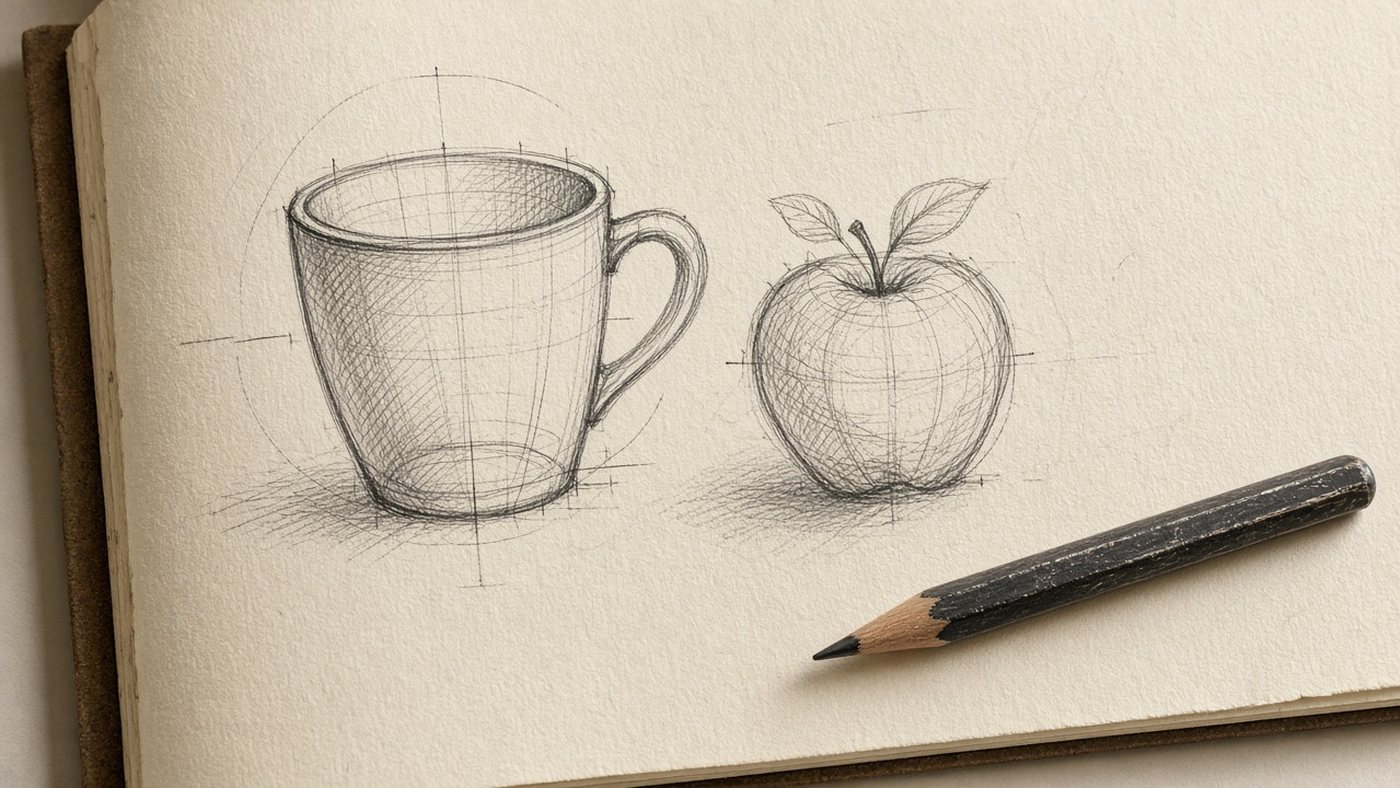
A sketchbook is a draft where you are allowed to draw badly. The moment you demand a "finished picture" from the page, the album dies. A digital version is more convenient than paper. It does not run out, and it does not get lost in a bag.
A place for bad drawings
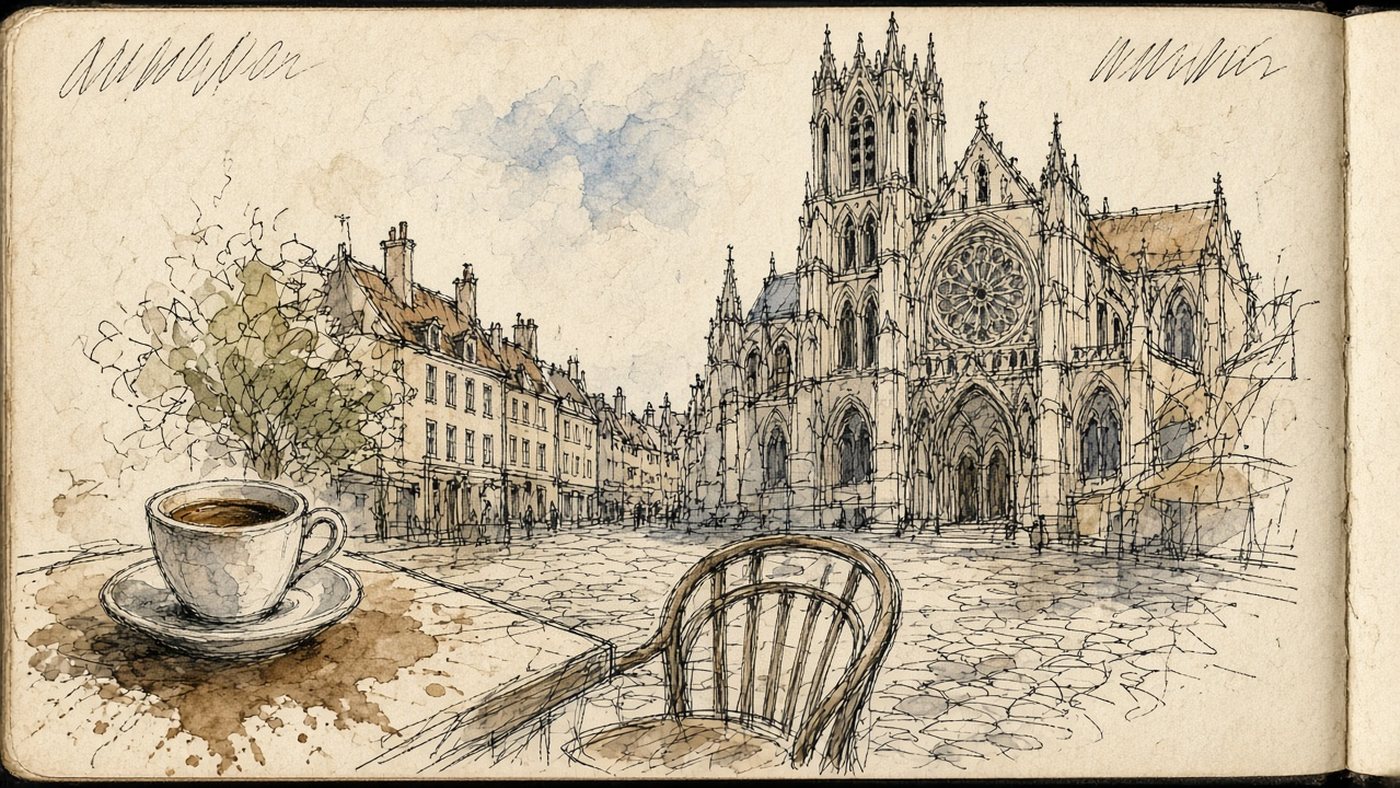
A bad drawing in a sketchbook is working material, not a failure. That is where you try a silly angle, quit halfway, and draw a mug ten times. Without that pile, ideas jump straight onto a "clean" canvas and freeze from fear. Allow yourself a page that no one will see.
Visible progress by date
Files with dates stack into a strip. After a month, open the first day and the last day side by side. The difference in the line is visible without talking yourself into it. Do not look at how pretty the pages are. Look at the density: how many days you opened the editor at all.
Organizing a digital album
Chaos kills the habit. A week later you cannot find a file named "untitled-17." The system has to be simple, or you will drop it.
Folders by month
One folder per calendar month, named "2026-10." Inside, only that month's sketches, with no study copies and no "important" illustrations. Keep finished pieces somewhere else, or the draft turns back into a show.
File names and tags
The file name is the date plus a short word: "04-10-mug," "04-10-bus." A tag at the end helps you search a subject six months later: hand, interior, face. If you draw several pages in one day, add a number, such as "-02."
A backup
Once a week, copy the month's folder to the cloud or to a second drive. A digital album disappears with the laptop in a single evening. A PNG export on the backup date is enough. Layered source files are not required for a draft.
What to draw
The subject should not require inspiration. Take what is already in front of you. Techniques for a quick sketch are in the guide to sketching for beginners.
An object from the table
A mug, headphones, keys, a crumpled receipt: a two-minute silhouette with no value. Do not color it "the right way." One line, one try. If you have minutes left, repeat the object from the other side of the table.
People on public transit
On the subway, people sit still longer than you expect. Draw the mass of the pose in 30–60 seconds: the tilt of the spine, the knees, the bag. You do not have to detail the face. The silhouette does the recognizing.
Mini ideas and compositions
Five tiny frames on one canvas: who is standing, where the window is, where the light falls. Then you pick one from the stack and grow it into a piece. If you have no subjects, take the list from drawing assignments for artists.
- An object in 2 minutes — contour only.
- A pose on transit — 60 seconds, no face.
- Four mini frames on one canvas.
- A repeat of yesterday's page from another angle.
Tip
Keep a separate canvas called "month index": a grid of previews of every page. Open one file and you can see immediately whether you drew or only meant to.
Rules so you do not quit
People quit a sketchbook from a bar set too high, not from laziness. Two rules hold the practice better than any motivation.
One page a day
The quota is one page, even if it is three lines. More is allowed. Less is not. When the quota inflates to "a finished drawing," a miss happens on the third day. For an outside list of prompts, use online drawing marathons.
No erasing
The eraser in a sketchbook is almost banned. Leave the wrong line and put the right one beside it. That keeps the page alive. A pretty page is not the goal. The goal is that the hand moves every day.
A monthly sketchbook review
On the last day of the month, open the folder as a grid of previews. Do not rate "like / dislike." Look for repeats and for raw material.
What repeats
- Open every page as a small preview on one screen.
- Mark three subjects that come back on their own: hands, cups, windows.
- Mark three gaps: an angle, legs, fabric — whatever you avoided.
- For the next month, set one gap as the subject of the week.
What to take into a finished piece
In the mess there is almost always a frame with a lively shape or an unexpected angle. Move it to a large canvas and carry the values through. One chosen subject is worth more than cosmetics on twenty drafts. Checking form without peeking is in the guide to drawing from memory.
Time to draw, not just read
Theory fades in a couple of days if you never use it. Open the editor and spend 15 minutes on what you just read. That is enough for the skill to stick.
Try it now
A free online editor: brushes, layers, a palette, and a shared canvas. No install and no sign-up.
Start drawingTopics in this guide
- online sketchbook
- digital sketchbook
- how to keep a sketchbook
- what to draw in a sketchbook
- daily sketches
← 25 drawing assignments for artists: a month of practice Online drawing challenges: how a challenge becomes a skill →