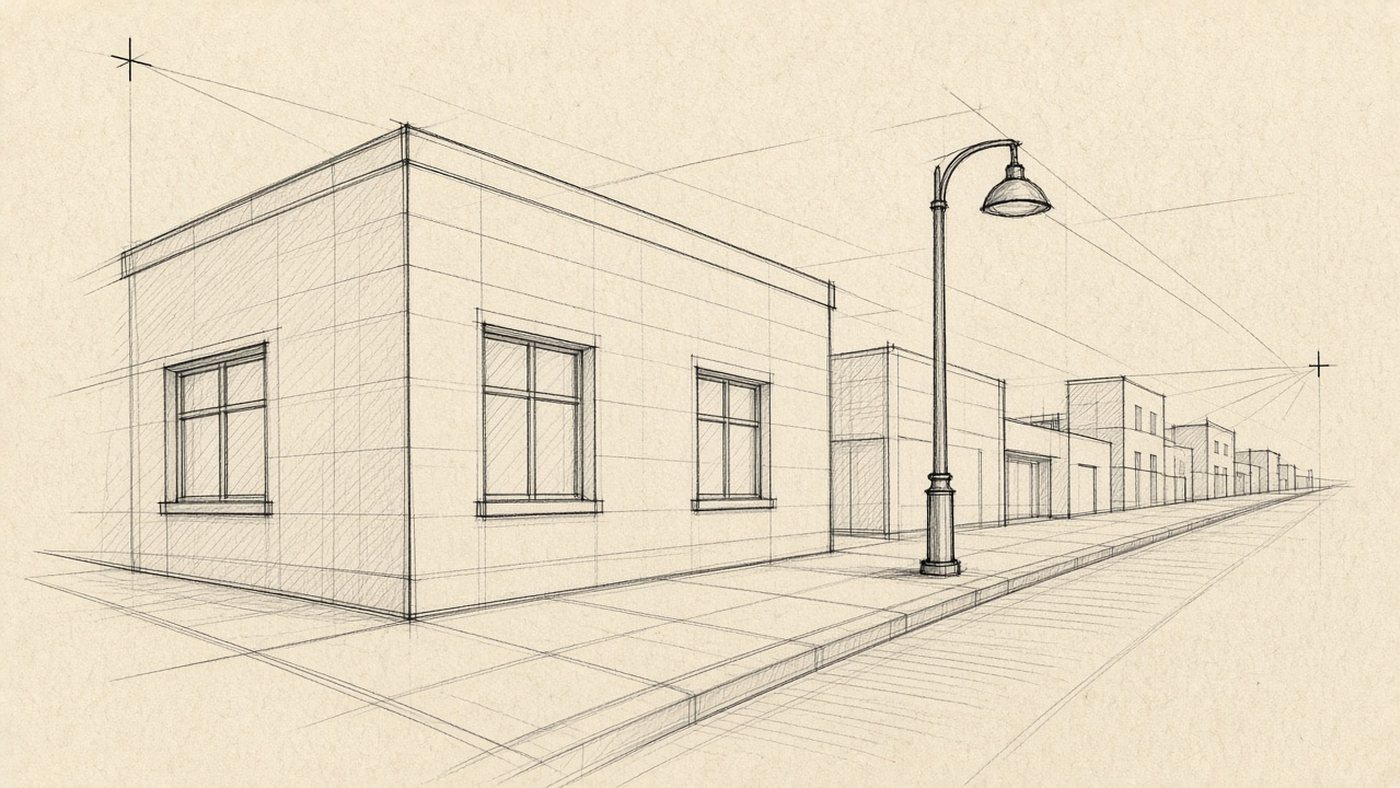
Why shortening feels wrong
Foreshortening is when a body part aimed at the viewer looks shorter and wider than memory says it "should." A palm toward the camera looks huge; a thigh in profile looks normal. That is not a perspective error—it is perspective at full strength.
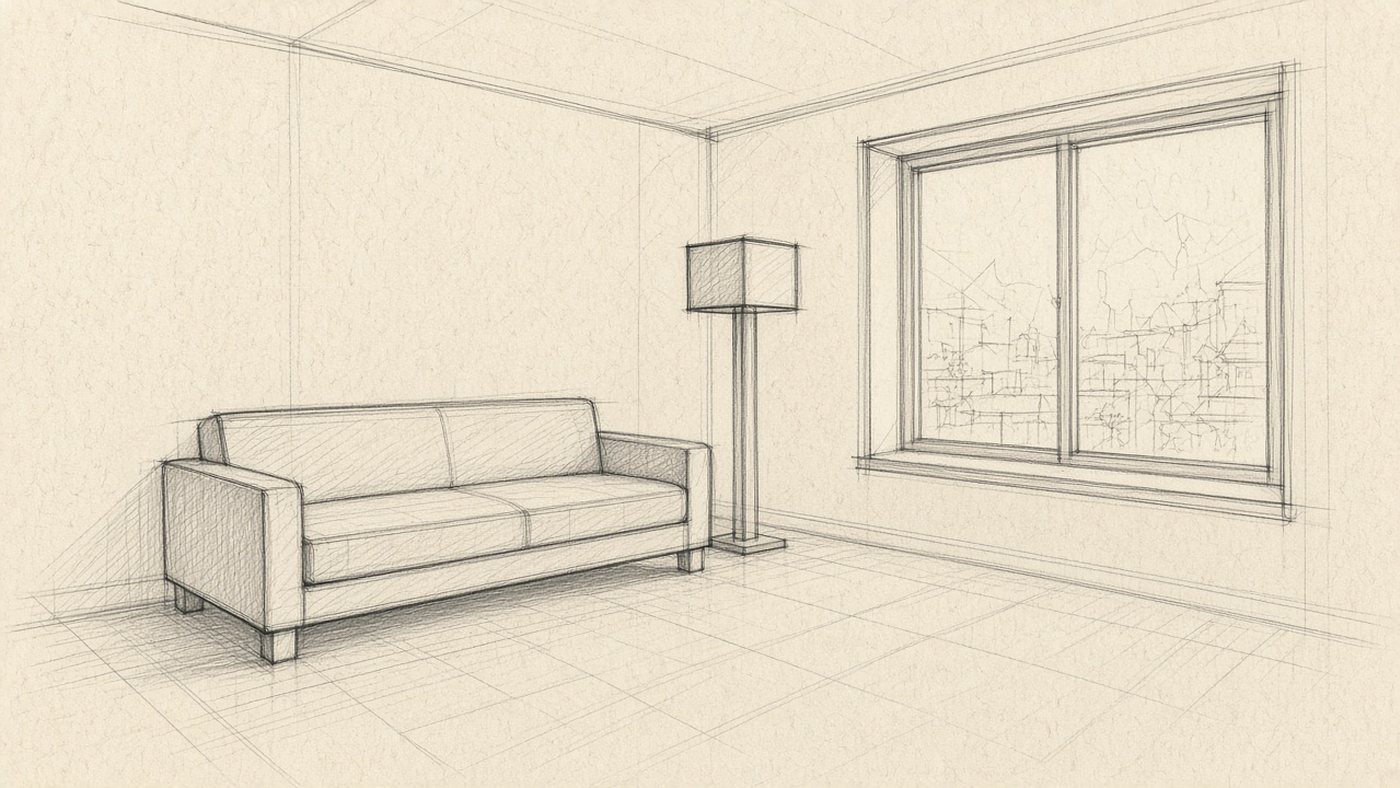
Conflict between knowing and seeing
You remember a forearm about twelve inches long, but on the page it spans two inches—the brain resists and "stretches" the segment. The fix: trust the viewing angle and anchor forms, not the front-view template from a textbook. A photo from the same spot settles the argument in a minute.
Closer = bigger
What is closer to the camera reads larger in length and width. A shoulder at the frame edge may cover half the face—draw it that way. Compare not "how it should be" but "what overlaps what" on reference.
Cylinders and axes
Limbs are a chain of cylinders with hinge joints. The axis runs through the bone; contour follows the cylinder, not a flat hand symbol.

The arm as three cylinders
Upper arm, forearm, hand—three blocks. In foreshortening the far block is shorter on the page, the near one wider. Block axes and ellipse cuts at wrist and elbow first, then volume. Basic joint mechanics are in anatomy for artists; here we add depth in the frame.
Axis through elbow and wrist
One line from shoulder through elbow to the middle finger holds the gesture. In foreshortening the elbow may sit almost on the shoulder line—the bend axis curves but does not zigzag. Check: if you remove contour, do the axes still read direction?
Hand toward the viewer
The classic test—palm at you, fingers up. The forearm shortens; fingers read as a fan of short sticks.
Palm as a plane
The palm is a tilted plane: near edge wider, far edge compressed. Do not give every finger the same length on the page: near fingers longer, far ones tucked into the palm. Joints are small ellipses, not same-size circles.
Fingers as short segments
- each finger—two or three cylinders, not one line;
- near finger overlaps the next—draw overlap order;
- nails and creases last, after segment lengths;
- compare palm width to the face on the same reference.
A detailed pass on hand gestures without shortening is in how to draw hands; combine it with cylinders here.
Leg and torso
Leg toward camera: knee closer, thigh receding—the thigh looks "squashed." Torso tilted—the rib cage reads as a tilted cylinder.
Knee closer to the camera
The kneecap reads large; the thigh behind narrows faster than in profile. The calf may hide almost entirely behind the knee. Start with a large knee ellipse and the shin line to the foot—not the calf contour from a flat diagram.
Chest tilted in space
Shoulders and the chest ridge are ellipses at different tilts. The near shoulder higher, the far one lower. Navel and shorts line are not parallel to the page edge—they follow pelvic tilt. Tie-in to vanishing lines is in the guide to perspective.
Shortcut
Photograph your hand or leg in the foreshortening you need and trace only axes and joint ellipses over the photo on a semi-transparent layer. Hide the photo and build volume—the scheme is already "right," and the fight with your brain is shorter.
Checking foreshortening
Check shortening from the same viewpoint and with silhouette—not against a flat template.
Photo from the same viewpoint
Camera at the character's eye level, not from above or below, unless the drawing is fisheye. Overlay a semi-transparent sketch: joint ellipses should line up. A segment length mismatch—fix the cylinder, not the muscle outline.
Silhouette on a black background
- Fill the background black, the arm white as silhouette.
- If "finger spikes" are equal length—foreshortening is weak.
- The near part should dominate by area.
- Invert and repeat after edits.
Time to draw, not just read
Theory fades in a couple of days if you never use it. Open the editor and spend 15 minutes on what you just read. That is enough for the skill to stick.
Try it now
A free online editor: brushes, layers, a palette, and a shared canvas. No install and no sign-up.
Start drawingTopics in this guide
- foreshortening
- shortening in drawing
- figure perspective
- how to draw a hand in perspective
- dramatic perspective
← How to Draw a Face From Scratch: A Framework Without a Template Doll Contrast and Focus: How to Lead the Eye Through a Drawing →