Advantages of an adult student
A child draws a lot and barely thinks about what they are doing. An adult draws less, and can take an error apart and not repeat it on the next piece.
- you can read instructions and follow them step by step;
- you can do a dull exercise when you understand why it exists;
- you plan your own schedule and do not wait for someone to take you to class;
- you can afford a tablet, though you do not need one in the first months.
The ability to break work down and analyze it
An adult does not look at a failed piece and stop at "it came out badly." They see a specific cause: a tilted horizon, flat values, head proportions that are off. After every drawing, write down one mistake and one decision for next time.
Motivation you chose yourself
You did not show up because a parent enrolled you in a class. You showed up because you wanted to. Write your reason in one sentence. You will need it in the third week.
What gets in the way most
Age and a full calendar are not what stop adults. The gap between taste and skill is. You can already see what is good, and your hand still draws it crooked.
The embarrassment of drawing "like a first grader"
The embarrassment shows up when you compare your first week with someone else's ten years. One habit fixes it: draw into a private folder and show the first thirty pieces to no one.
Perfectionism
Wanting it to be good immediately means you erase the sketch ten times and never reach the end. Set a rule: the drawing is finished when the time is up, however it came out. More techniques are in the piece on perfectionism in drawing.
Check
After a month, open your first drawing and repeat the same subject without looking at the old version. The difference between the two pieces is the most honest report of progress you will get.
How to find the time
A working person does not have a free three hours, and waiting for them is pointless. Almost everyone does have twenty minutes that go to scrolling a phone. Drawing fits in that slot.
15 minutes instead of three hours
Fifteen minutes a day is more than seven hours of practice a month. Three hours on Sunday adds up to twelve hours, but the first Sunday is usually the last one too. A closer look at how to free a window of time is in the guide to finding time to draw.
Drawing instead of a news feed
Do not add drawing on top of your schedule. Replace a specific habit with it. Keep the editor open in a pinned tab. The fewer steps to the canvas, the more likely you are to sit down and draw.
Where to start, specifically
Do not start with a portrait or a landscape. Start with line and with simple objects on the table. Below is a concrete plan for the first seven days, fifteen minutes each.
Week one: line and objects
- Day 1: thirty long lines between two points, with no erasing.
- Day 2: fifty ellipses at different tilts, on one layer.
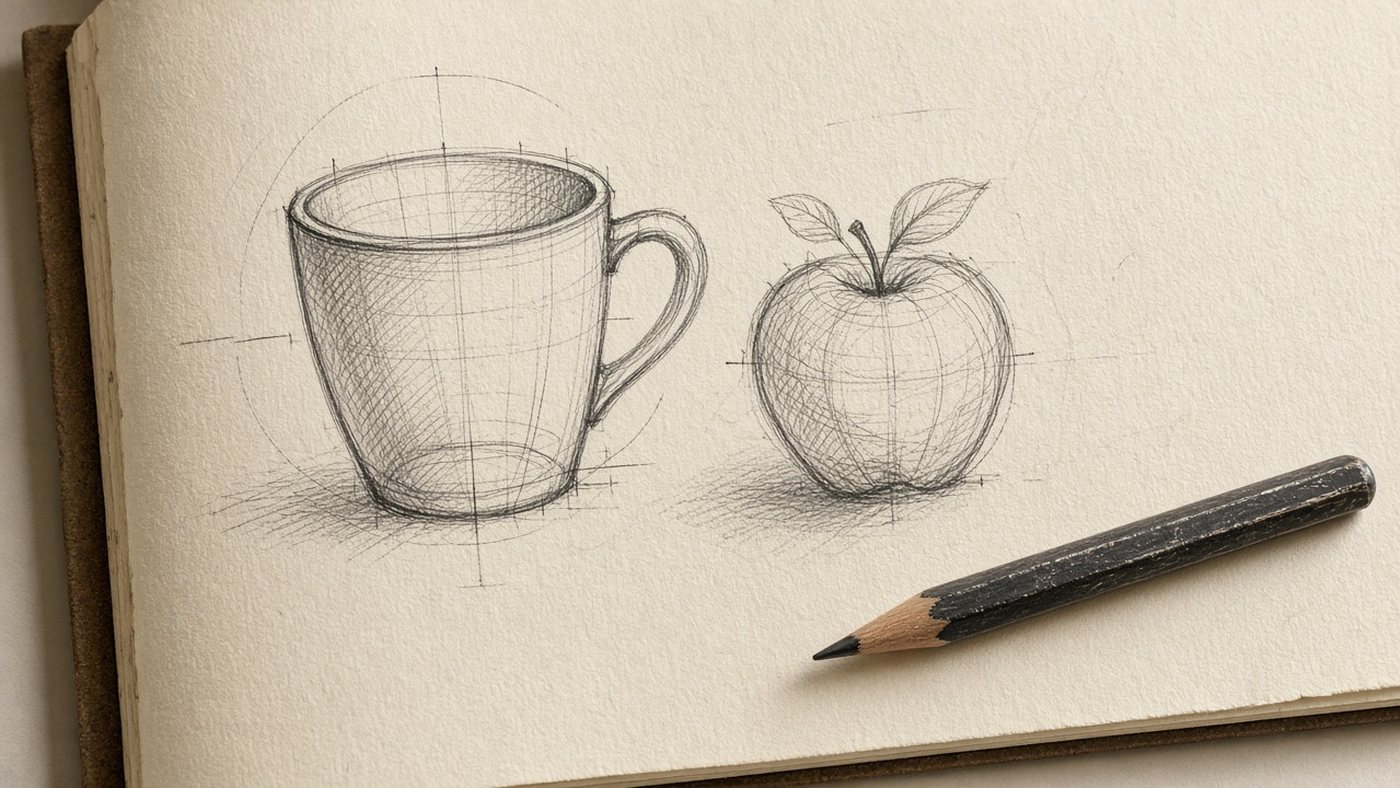
- Day 3: a cube, a sphere, and a cylinder, three times each, in different rotations.
- Day 4: a mug from the table, contour only, ten minutes.
- Day 5: the same mug, this time with the proportions measured.
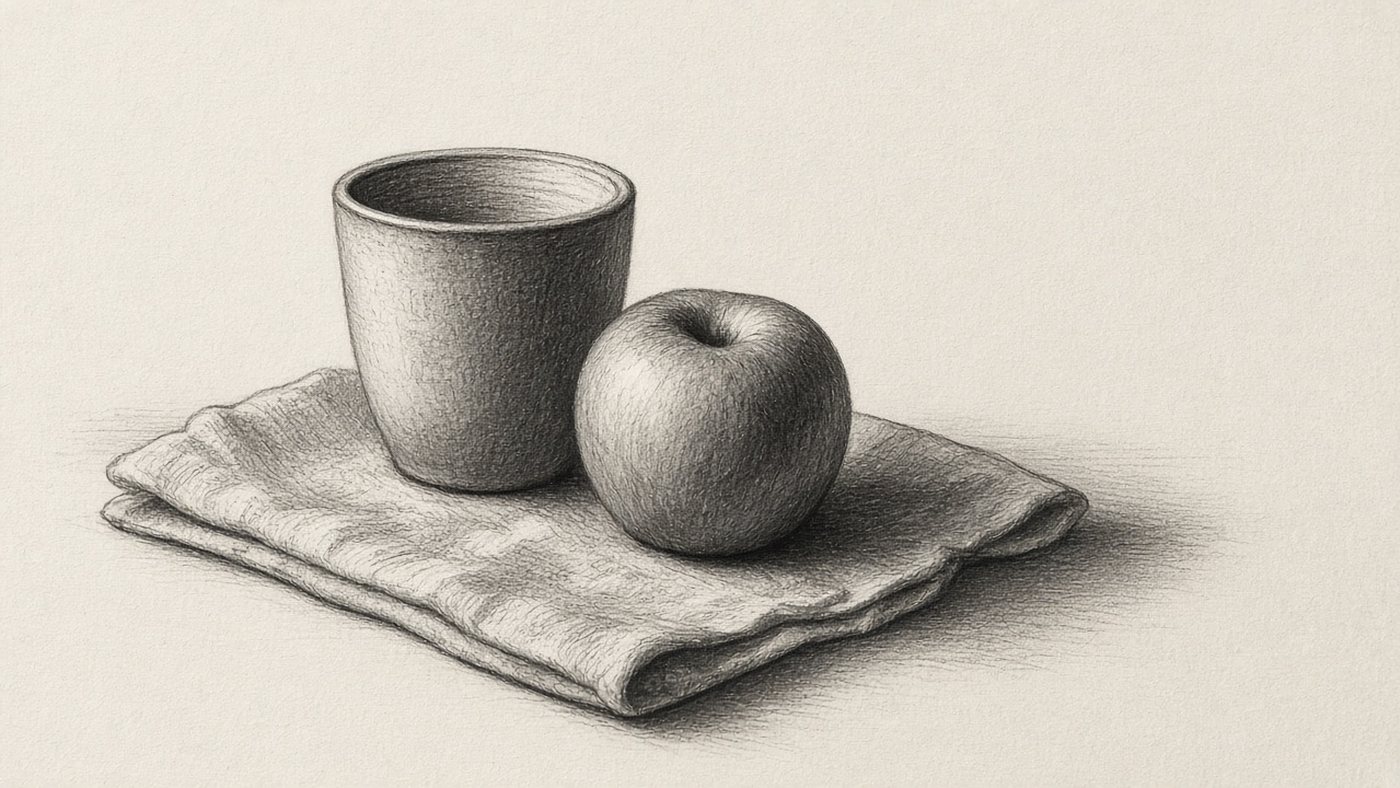
- Day 6: three objects side by side in one sketch.
- Day 7: repeat the least successful assignment of the week.
Month one: value and color
From the second week, add light and shadow: one value scale and one object in three values per session. Bring in color toward the end of the month, and limit it right away: two colors plus white. A ready calendar for the month is in the 30-day learning plan.
How not to quit
People quit because they cannot see a result, not because they lack talent. The two habits below keep you in the practice better than willpower.
Small tasks and a record of progress
"Draw a portrait" is intimidating. "Draw one eye in 12 minutes" is not. A folder of work sorted by date replaces a report. Scroll through it and you see the growth.
A community or a partner
Agree with one person that you will send each other a drawing once a week. A promise made to a real person holds better than a promise made to yourself.
Time to draw, not just read
Theory fades in a couple of days if you never use it. Open the editor and spend 15 minutes on what you just read. That is enough for the skill to stick.
Try it now
A free online editor: brushes, layers, a palette, and a shared canvas. No install and no sign-up.
Start drawingTopics in this guide
- drawing for adults
- start drawing at 30
- learn to draw at any age
- drawing from scratch as an adult
- a hobby for adults
← Drawing for kids online: how to set up the sessions Artist portfolio: how to build your first and get a response →