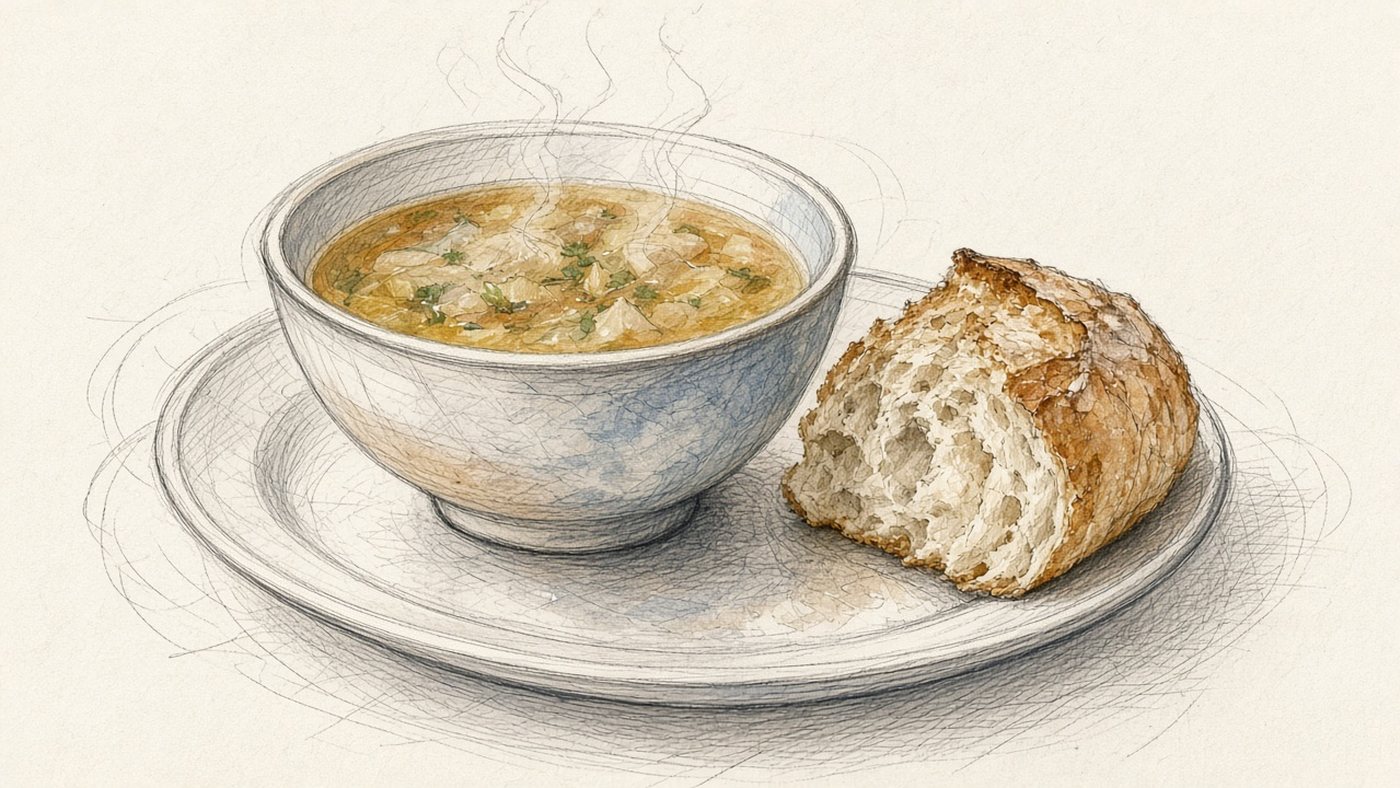
What Makes Food Look Appetizing
Appetite in illustration is highlight contrast and warm light—not maximum detail on every crumb.
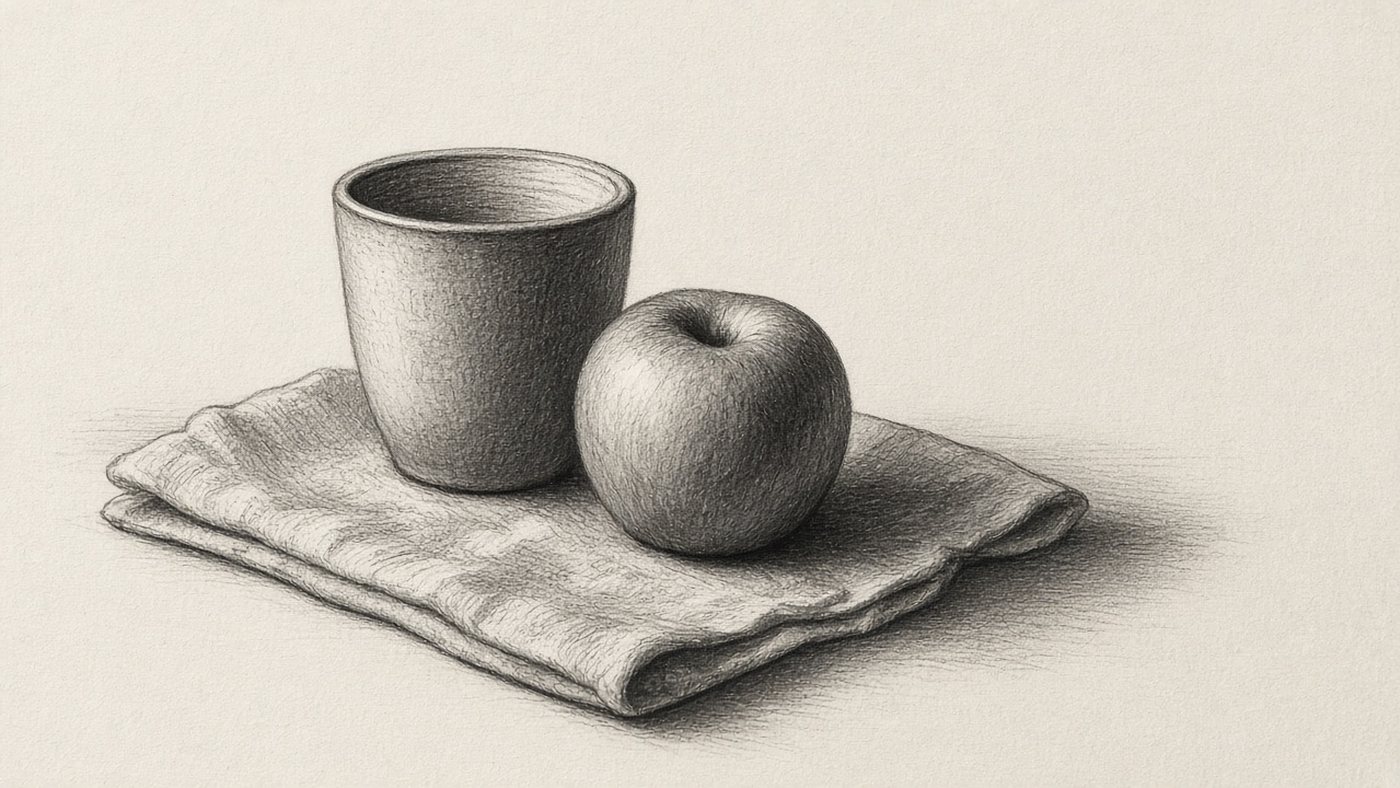
Highlight and Contrast
Matte crust and glossy glaze differ in highlight shape: a narrow strip on a berry, a broad patch on chocolate, a diffuse gleam on bread. Without a light highlight the subject looks gray and \"day-old.\" The light–shadow scheme from still life for beginners works for a dessert plate too.
Warm Light
Keep the source slightly warmer than daylight: cream, honey, and fried crust lean yellow-orange; shadows go cool brown or violet, not muddy gray. One warm key light from the side is enough for a food sketch.
Fruit and Berries
Fruit is a sphere or ellipse with local color and one main highlight.
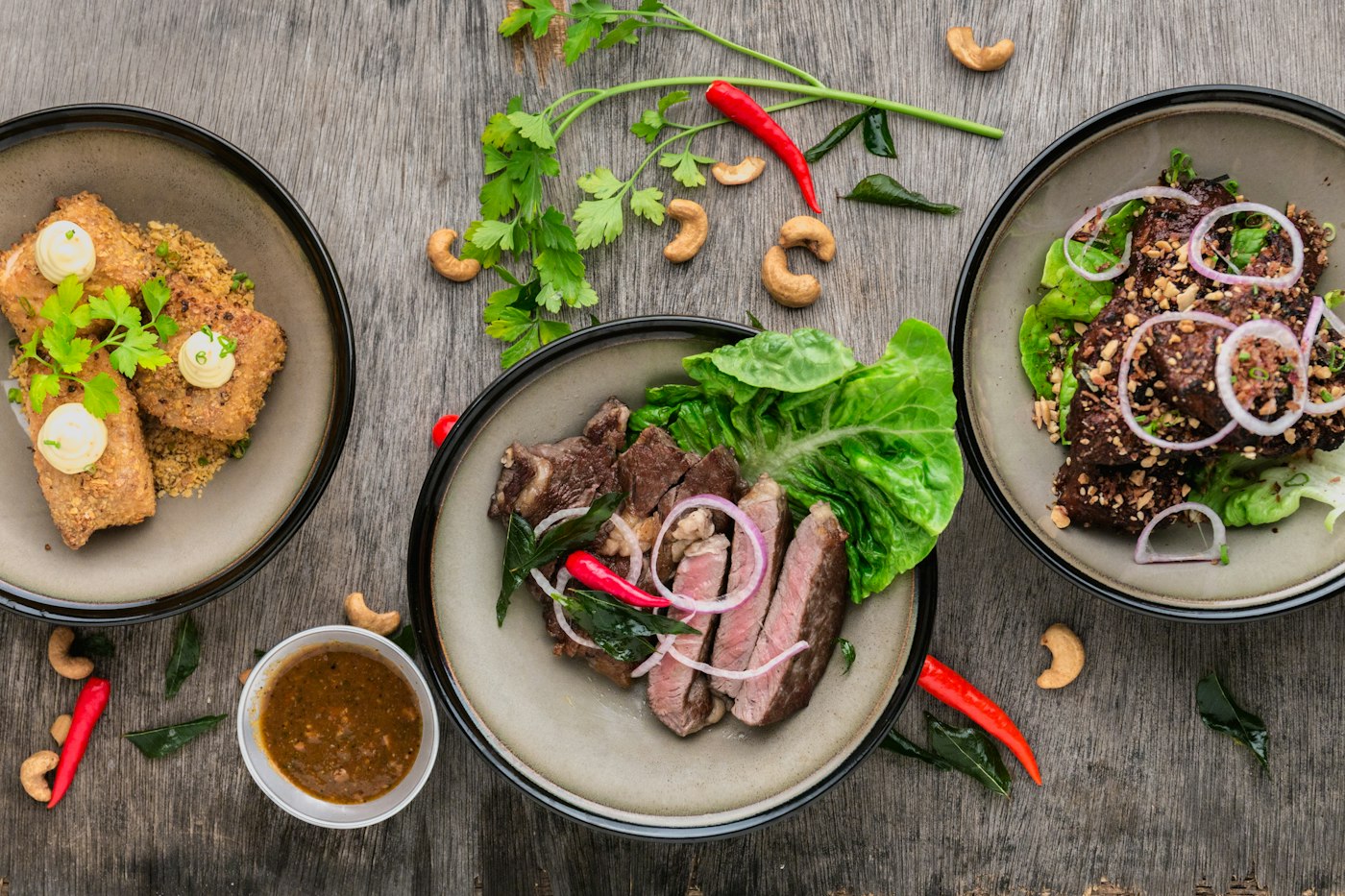
Color Block + Highlight
Start with flat fill (red apple, purple plum), then half-shadow on the form, then a white or near-white highlight on one side. A secondary highlight is weaker. Keep transitions soft—like a petal in how to draw flowers, only with a juicier palette.
Stem and Shadow on the Table
Stem—a short cylinder; shadow under the fruit—an ellipse pressed to the \"table,\" darker at the base. Shadow ties the object to the surface; without it the apple floats.
Baked Goods and Textures
Baked goods read through the edge, crumbs, and matte vs gloss.
Crumbs With Dots
Crumbs are random dots and grains at the slice edge—not even texture over the whole area. Density is higher where the cake broke. Do not draw every crumb the same size.
Matte Cream vs Glaze
Cream—soft shadow, almost no sharp highlight. Glaze and honey—hard highlight and saturated color. Layer cake: each layer slightly darker in shadow, lighter on the facing edge.
Drinks and Transparency
A glass is the most common fail—liquid and glass get one tone.
- Glass outline and ellipse for liquid level.
- Fill liquid lighter than it looks—glass will darken it.
- Dark strip on the opposite side—glass thickness.
- Vertical highlight stripe on the front face.
- Ice, lemon, straw on top, with their own shadows.
Glass and Liquid
Liquid inside slightly distorts contours behind the glass—you can hint with a shifted background line. Glass rim—two lines (thickness). Leave light between highlight and outer contour.
Bubbles and Ice
Bubbles—white dots and rings in soda, fewer toward the top. Ice—semi-transparent blocks with strong internal highlight and bluish refraction in shadow.
Tip
Draw one hero—apple, cake slice, or glass—on a neutral background. Appetite breaks on cluttered composition, not on \"too few details.\"
Food Illustration Composition
Food should dominate; background and props stay secondary.
One Hero
One large subject centered or on a third; everything else smaller and simpler. Several identical croissants—rhythm; one croissant with a broken piece—story.
Background Simpler Than the Food
- solid tablecloth or table without pattern;
- 2–3 colors max in the background;
- cafe reference—simplify extra objects.
For stylized food in pixels, see palette limits in pixel art for beginners; for realistic highlight on a plate—drawing form and volume.
Time to draw, not just read
Theory fades in a couple of days if you never use it. Open the editor and spend 15 minutes on what you just read. That is enough for the skill to stick.
Try it now
A free online editor: brushes, layers, a palette, and a shared canvas. No install and no sign-up.
Start drawingTopics in this guide
- how to draw food
- food illustration
- drawing food
- how to draw fruit
- food art
← Doodling in a Notebook: "For Nothing" Drawings That Teach A Horse Is Not a “Dog With a Long Neck”: Proportions That Save Your Sketch →