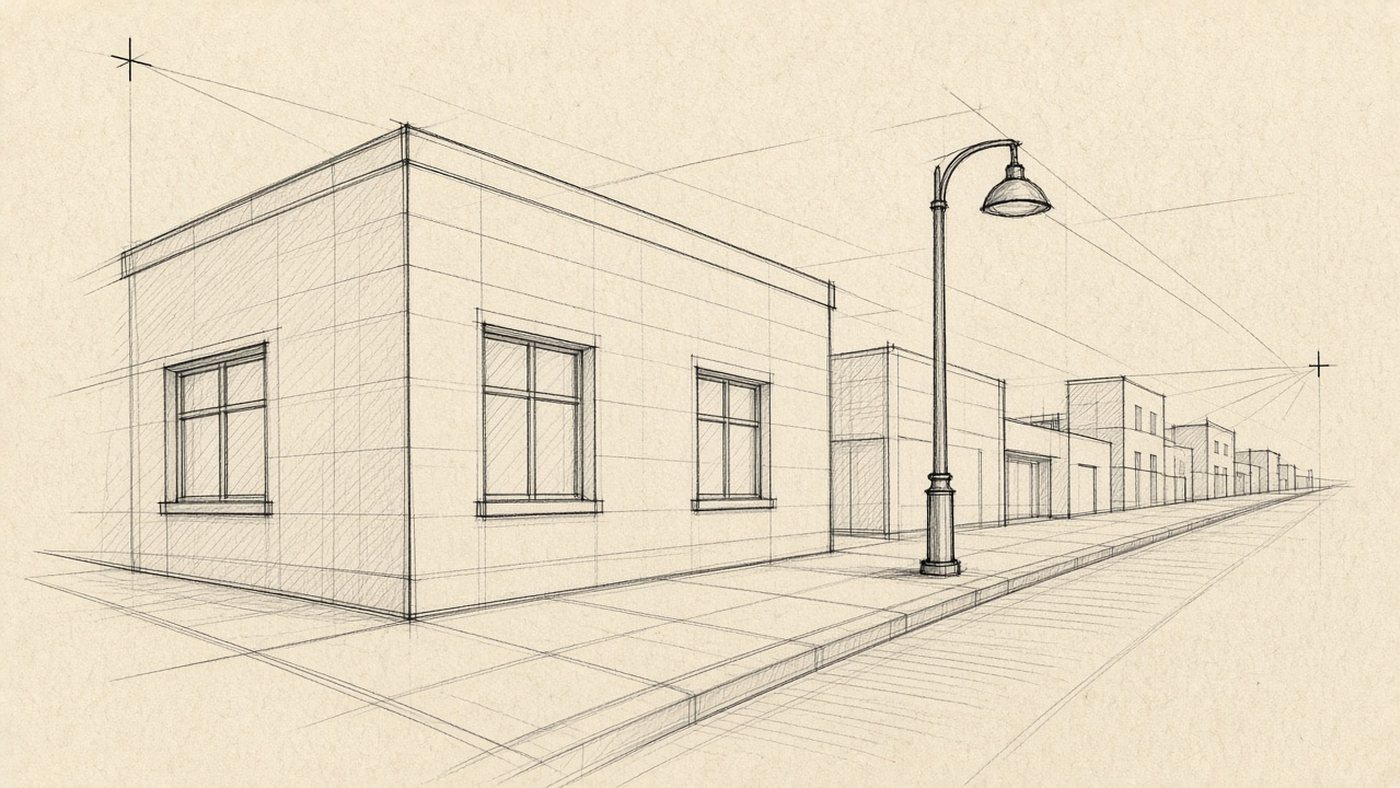
What negative space is
Negative space is everything the subject does not occupy: the gap between branches, the hole between a chair's legs, the strip of sky between buildings. Positive space is the object itself. Both layers matter equally for the silhouette: if the emptiness breaks, the object's shape stops reading too.
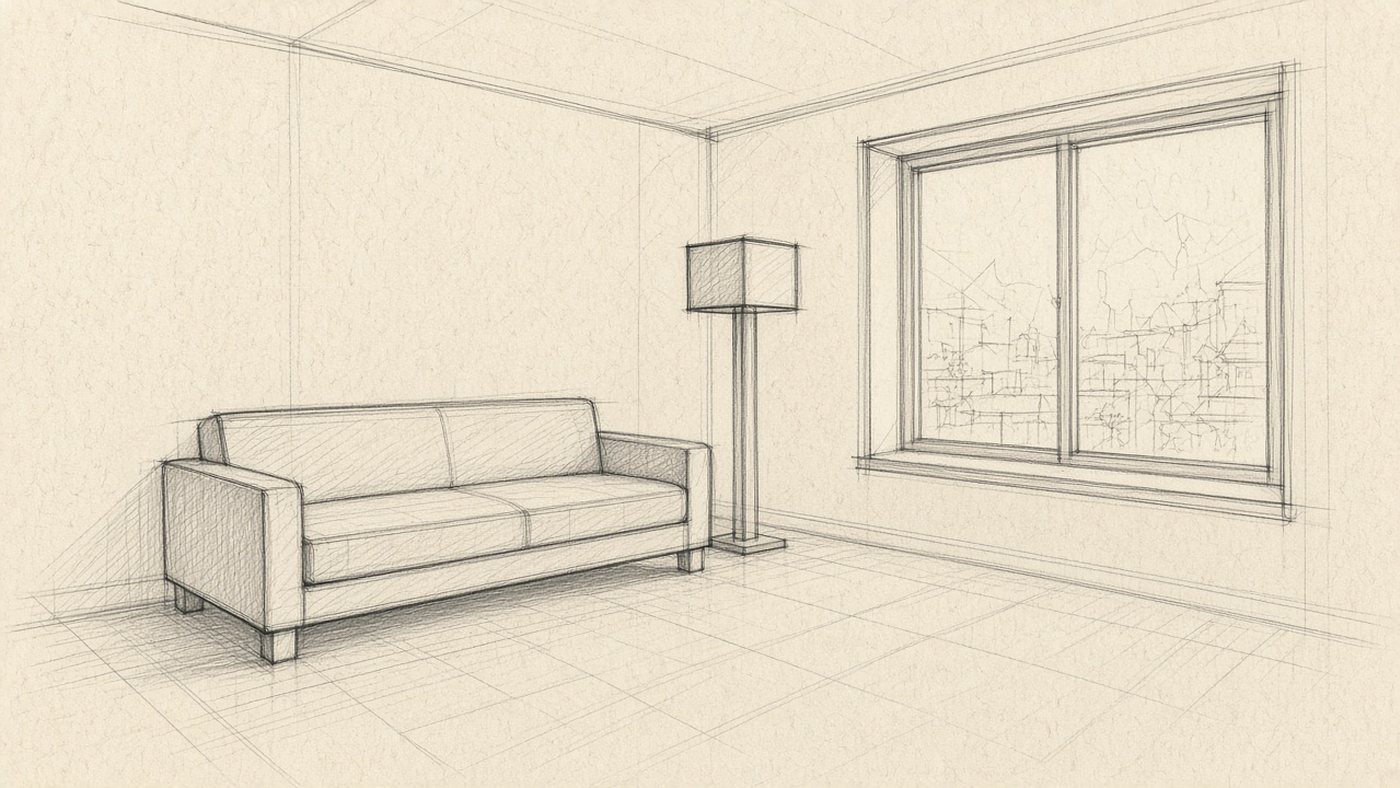
Emptiness as shape
Emptiness has a contour, angles, and width—just like a mug. Draw only the outline of the gap between hand and thigh and you get a recognizable pose without finger detail. Artists use this to catch gesture fast and check whether they inflated the object.
Why the brain gets in the way
Your brain stores a symbol: "chair—four legs and a back." You draw the symbol, not what you see, and proportions drift. Emptiness has no label, so it is easier to copy honestly. Shifting attention from the thing to the holes between the legs drops the template in one session.
- look at the contour of the empty shape, not at "what it is";
- compare the angles of gaps: one narrower, one wider;
- measure the width of emptiness relative to the whole silhouette;
- do not add detail until the silhouette lines up.
Observation exercises
Ten minutes a day is enough for the eye to start seeing negative space automatically. Use simple objects: a chair, scissors, a fork—they have strong, readable holes.
Draw only the gaps between the legs
Put a chair on a table. Cover the seat with your palm and draw only the three or four gaps between the legs and the floor. Then lift your hand and add the seat outline using the anchors you already found. A mistake in gap width shows up immediately on a leg.
Silhouette on a black background
Cut a vase or profile silhouette from paper and glue it on black stock. Draw not the white shape but the black field around it—like a puzzle. Digitally, fill the background and use the eraser for holes of light. The brain stops drawing "vase" and works the edge instead.
Negative space in the figure
On a live model the emptiness changes every second, but the principle holds: gaps lock proportions faster than tracing muscles. That complements measuring from the article on proportions.
The gap between arm and body
In profile with a hand on the hip, the triangle between elbow and waist is often narrower than it feels. Block in that triangle first, then the forearm width inside it. If the triangle collapses to a slit, the elbow has moved too close to the torso.
Between fingers and under the elbow
Spread fingers are five small negative shapes. Do not draw a finger whole: find the gap between middle and ring finger, compare it to the gap by the index. Under a bent elbow—a curved window of light; its radius shows how parallel the forearm is to the body.
Checking a finished drawing
When the contour feels done, run checks that do not depend on how "pretty" the hatching is.
Squint and silhouette
Squint until you see only large masses. You should still have big black and white shapes and a few gaps between them. If everything merges into one blob, negative space is not working—separate the objects or strengthen edge contrast.
Inversion in the editor
- Make a layer with the silhouette in one color.
- Invert the colors or fill the background with the opposite tone.
- Look for extra notches and holes with the wrong shape.
- Fix the contour and invert again.
Check
Cover the sheet with a window cut the size of a credit card and move it over the drawing. In each window you should see one readable empty shape or one clear object edge. If the window is mush, detail scale or gap proportions are off.
Tied to composition
Negative space is not only a sketch trick—it is part of the frame. Air between figures sets rhythm the same way lines and value do. More on placing objects in the guide to composition.
Air between objects
Three objects in a row stick together when the gaps are equal and random. Compare distances: one window of emptiness wider—and the eye goes there first. The space between hand and object can be stronger than the object itself.
Emptiness as an accent
A large field of sky or wall around a small figure is a deliberate negative accent. It is not "empty paper" but a shape that presses on or frees the subject. Before filling the background, ask: does this emptiness need to be this size, or can you tighten it so the story does not drown?
Time to draw, not just read
Theory fades in a couple of days if you never use it. Open the editor and spend 15 minutes on what you just read. That is enough for the skill to stick.
Try it now
A free online editor: brushes, layers, a palette, and a shared canvas. No install and no sign-up.
Start drawingTopics in this guide
- negative space
- negative space in drawing
- silhouette in drawing
- how to see shape
- observation exercises
← 15 Beginner Mistakes: how to fix them today Textures and Materials: How to Draw What Something Is Made Of →