What Visual Weight Is
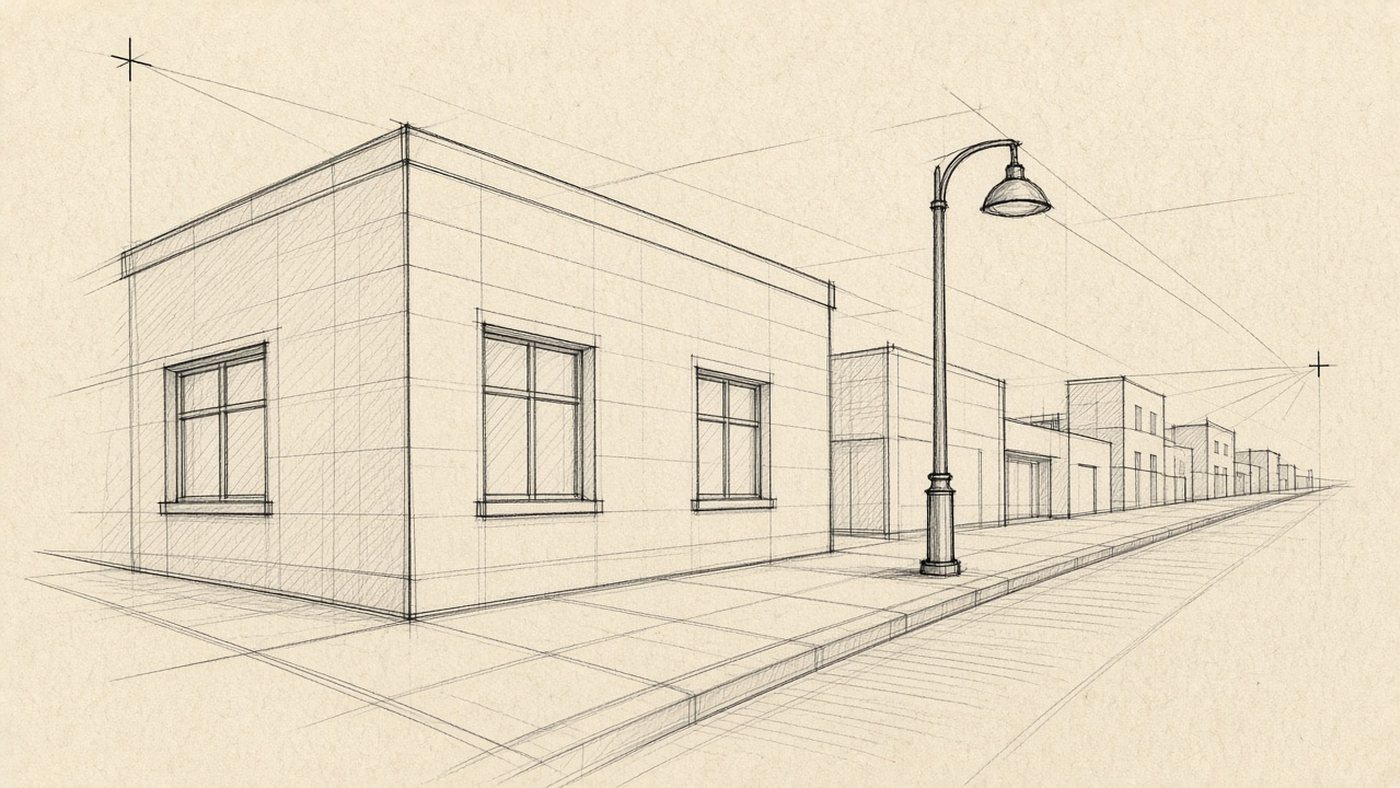
Visual weight is how strongly a shape pulls the eye. A picture has no real gravity, but the eye still feels when one half is heavier than the other. Control the weight, and you decide where the viewer looks first and where they go after that.
Size, Value, Color, Detail
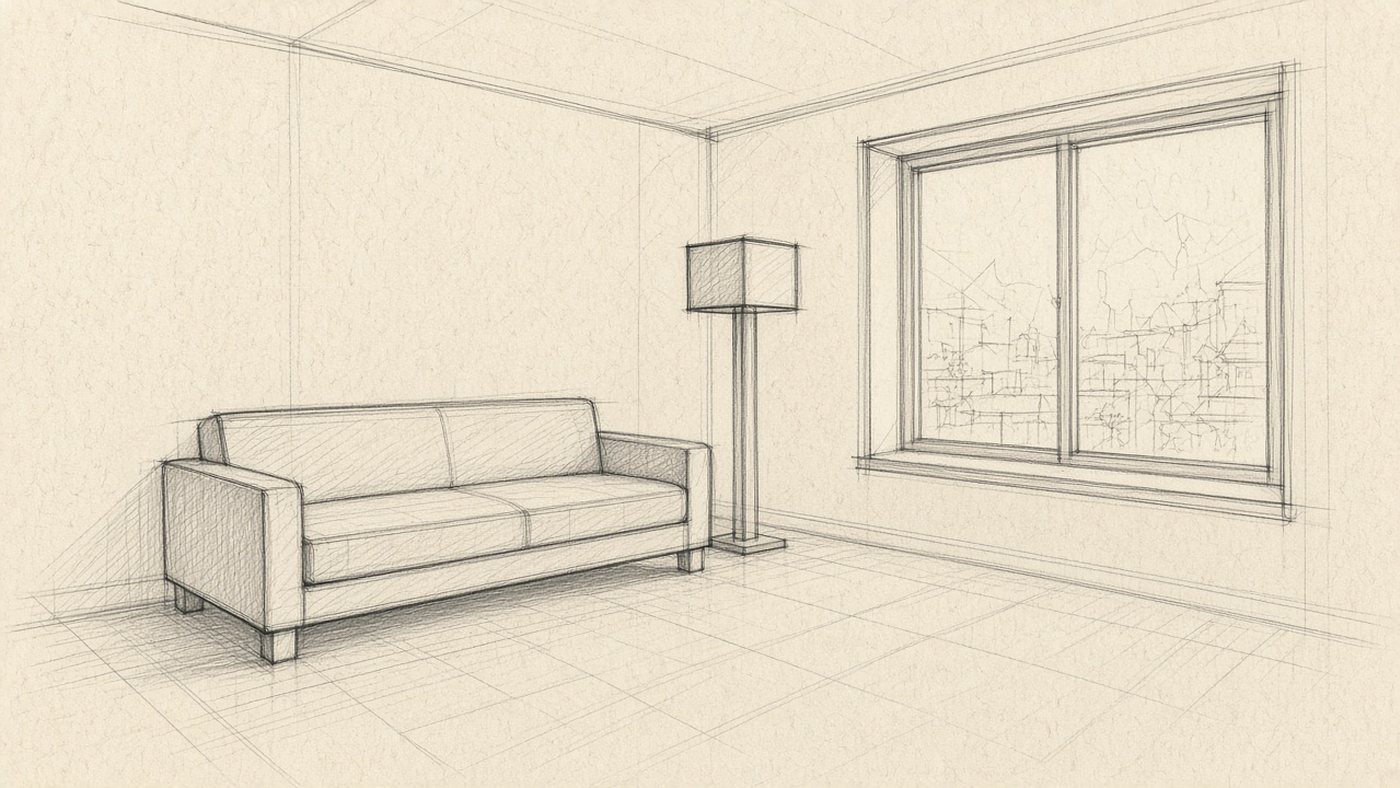
- size: a large shape weighs more than a small one;
- value: the stronger the contrast with the background, the heavier the object;
- color: a saturated warm color outweighs a muted cool one;
- detail: a worked-up passage pulls the eye harder than a smooth one;
- a face and the eyes: people always look there first.
How a Small Shape Outweighs a Large One
A tiny red dot on a huge gray field gathers all the attention. Weight depends on how different a shape is from what surrounds it, not on its area. That is a handy way to balance a composition: a large calm mass on the left is held by a small bright accent on the right.
Symmetry and Asymmetry
There are two ways to hold balance: a mirrored one, and one you judge by weight. Both work. They simply give a different mood.

When Symmetry Works
Symmetry gives calm, solemnity, and order. That is how icons, coats of arms, and posters are built. It fits when the subject is still and you want the force of a straight-on gaze. To keep the frame from going dead, break the symmetry in one small detail.
Asymmetric Balance
Here the two halves differ, but the weights match: a large dark silhouette on the left, three small light shapes on the right. A composition like that feels more alive, and it is almost always more interesting. The basics of placing objects are covered in the article on composition.
Check
Mentally set the picture on a pencil at the center. If it falls to one side, add empty space on that side, and add an accent or a detail on the lighter side.
Rhythm in a Drawing
Rhythm is repetition with intervals between the elements. It leads the eye through the picture the way beats lead you through a song.
Repetition with a Change
Five identical trees at equal spacing look like a fence. Change the size, the tilt, and the gaps: two close together, one far away, one a little higher. A rhythm varied like that reads as alive, because perfect intervals do not happen in nature.
Pause and Empty Space
Without pauses, rhythm turns into noise. Leave areas where nothing happens: clear sky, a smooth wall, an empty table. Empty space lets the eye rest and makes the accent easier to see. It is a companion tool to the rule of thirds.
How the Eye Moves
A good composition is a route. The viewer enters the frame, moves through it, and comes back to the main subject.
Guides and the Entry Line
A road, a river, a shadow, or a character's gaze works like an arrow. The eye usually enters from the lower left, and that spot is a good place for a large detail that acts as a step. Then lead the viewer on a diagonal toward the focal point, not in a straight line across the page.
How to Keep the Eye Inside the Frame
If a line runs into the edge, the eye leaves the picture. Place stoppers along the edges: a dark shape, a branch, a post, a character's back. A character looking past the edge of the page also pushes the viewer out. Turn them at least a quarter turn inward. The same principle holds attention in comics and storyboarding.
Practice on Thumbnails
You cannot fix composition at the end. You decide it in five minutes, on small sketches, before the drawing starts.
Five Sketches of One Scene
- Draw five rectangles, 5 by 5 cm.
- Spend 60 seconds on each, and lay the scene out in three values: light, middle, and dark.
- Change only where the masses sit, not the subject.
- Set the thumbnails side by side and pick the one that reads best.
- Draw that one at full size. Leave the rest in the sketchbook.
Checking by Squinting
Squint until the details disappear and only the shapes remain. If the piece turns into an even gray mush, it has no rhythm and no center. Flipping the canvas horizontally helps too: a lopsided weight becomes obvious in a second.
Time to draw, not just read
Theory fades in a couple of days if you never use it. Open the editor and spend 15 minutes on what you just read. That is enough for the skill to stick.
Try it now
A free online editor: brushes, layers, a palette, and a shared canvas. No install and no sign-up.
Start drawingTopics in this guide
- rhythm in composition
- balance in composition
- visual weight
- asymmetry in drawing
- repetition and pause
← Atmospheric Perspective: how to draw distance, fog, and depth Rule of Thirds: a fast way to improve the frame →