Where Reflected Light Comes From
Light does not stop when it hits an object. It bounces onward. Some of those rays land on the shadow side of nearby objects and lighten it a little. That lightening is reflected light.
Light Bounces Off Everything
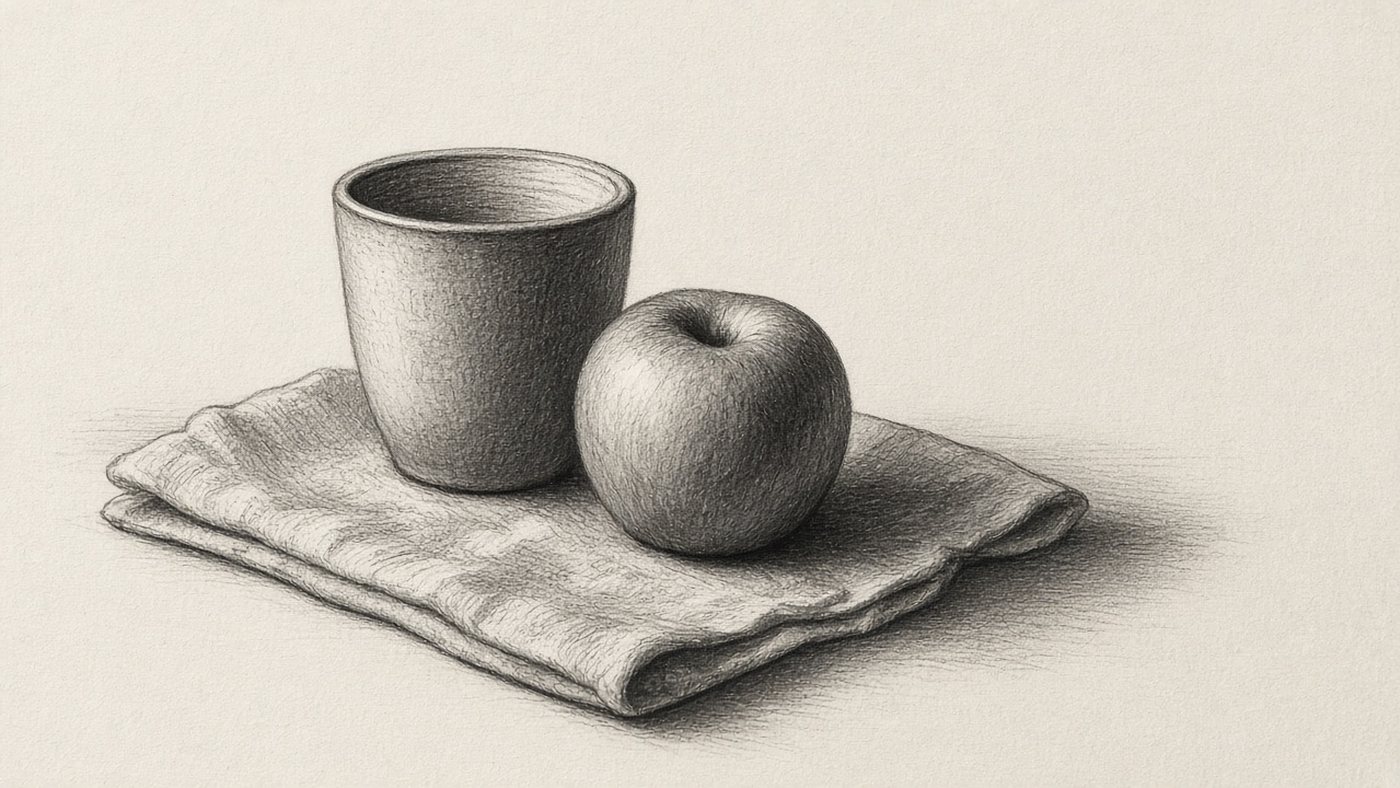
Set a white mug on a red notebook by a window. Within a minute you will see a pinkish band on the lower part of the mug, on the shadow side. There is no second light source. The light simply bounced off the red paper.
Surrounding Color in the Shadow
Reflected light always carries the color of whatever it bounced from. Green grass lights the bottom of an object with green, and a brick wall lights it with orange. A gray shadow straight from the tube is almost always a lie: in real life, the surroundings color it.
Reflected Light Inside Light and Shadow
Reflected light is one of the five lighting zones, and it has a definite place. Move it, and the volume falls apart.
Where It Sits on a Sphere
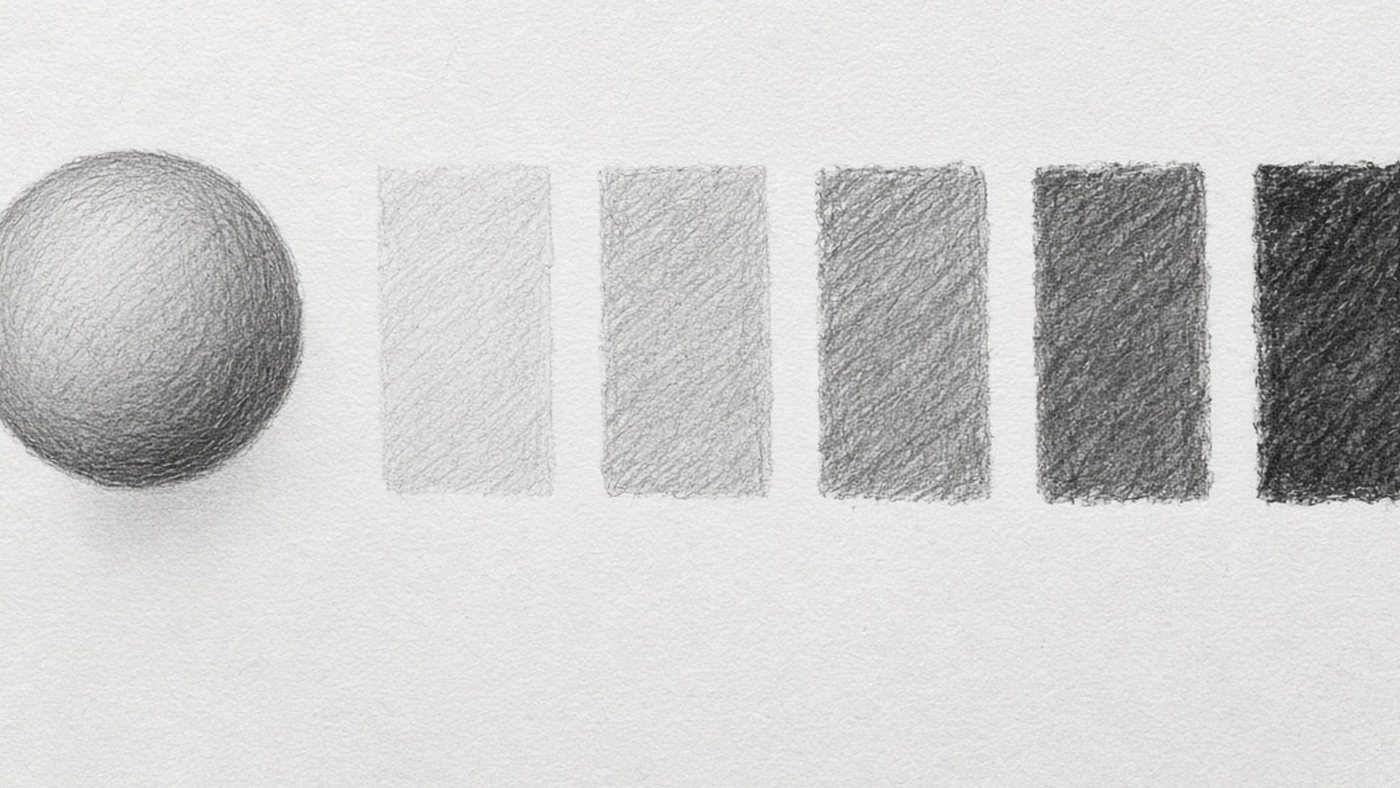
On a sphere the zones run in order: highlight, light, halftone, form shadow, and reflected light at the very bottom edge. Reflected light never sits in the middle of the shadow. It sits only at the boundary, closer to the table. A full breakdown of all five zones is in the article on light and shadow.
Why the Form Shadow Stays Dark
Reflected light is always weaker than direct light, because it loses energy on every bounce. Even the brightest reflected light has to stay darker than the darkest halftone on the lit side. Treat that as a hard rule. It is what saves the volume.
Check
Desaturate the piece and compare the value of the reflected light with the value on the lit side. If the reflected light falls in the same lightness group as the light, it is too bright. Mute it by two steps on the scale.
Color in the Shadow
A shadow is not the same color, only darker. It changes temperature and saturation.
Warm Light, Cool Shadow
If a warm lamp or the sun at sunset lights the object, the shadow shifts toward blue and violet. With a cool source, it goes the other way: the shadow turns warmer and more ocher. That contrast of temperature makes the picture rich without raising the brightness. Color theory covers how this works.
The Sky as a Source of Reflected Light
Outdoors in daylight, two sources are at work: the yellow sun, and a huge blue sky. Anything the sun does not light directly picks up blue reflected light from the sky. That is why snow in shadow is blue, not gray, and it is the argument beginners have most often with their own eyes.
Common Mistakes
Reflected light is easy to turn from a tool into a problem. There are exactly two mistakes, and you can fix both in a minute.
Reflected Light That Is Too Light
The most common trouble is a white band along the bottom edge of the object. The form immediately looks like an inflatable ball lit from the inside. Keep reflected light inside the dark half of the value scale, and never use pure white for it.
Reflected Light on Everything
- matte surfaces, such as fabric, wood, and paper, give barely noticeable reflected light;
- smooth glossy ones, such as metal, ceramic, and glass, give reflected light that is bright and crisp;
- a dark object on a dark background gets almost no bounced light;
- if nothing bright is nearby, there is simply no reflected light.
Practice
You cannot learn reflected light from a description. You have to see it with your own eyes once.
An Object on Colored Paper
- Set a white egg or a mug on a sheet of colored paper.
- Aim a desk lamp from the side, at a 45-degree angle.
- Draw the object in color for 20 minutes, watching the lower edge of the shadow.
- Swap the paper for another color and repeat.
- Compare the two drawings. The object is the same, and the shadows are different.
Three Bounces on One Sphere
Surround the sphere with three sheets of paper: blue on the left, yellow on the right, and red underneath. The shadow side will pick up all three hues, blending into one another. Check yourself with the eyedropper on a photograph. Ways to use it are collected in the piece on picking color online.
Time to draw, not just read
Theory fades in a couple of days if you never use it. Open the editor and spend 15 minutes on what you just read. That is enough for the skill to stick.
Try it now
A free online editor: brushes, layers, a palette, and a shared canvas. No install and no sign-up.
Start drawingTopics in this guide
- reflected light in drawing
- bounced light in art
- color in shadows
- how to paint colored shadows
- light and shadow
← Fabric Folds: logic instead of random lines 15 Beginner Mistakes: how to fix them today →