Body Framework
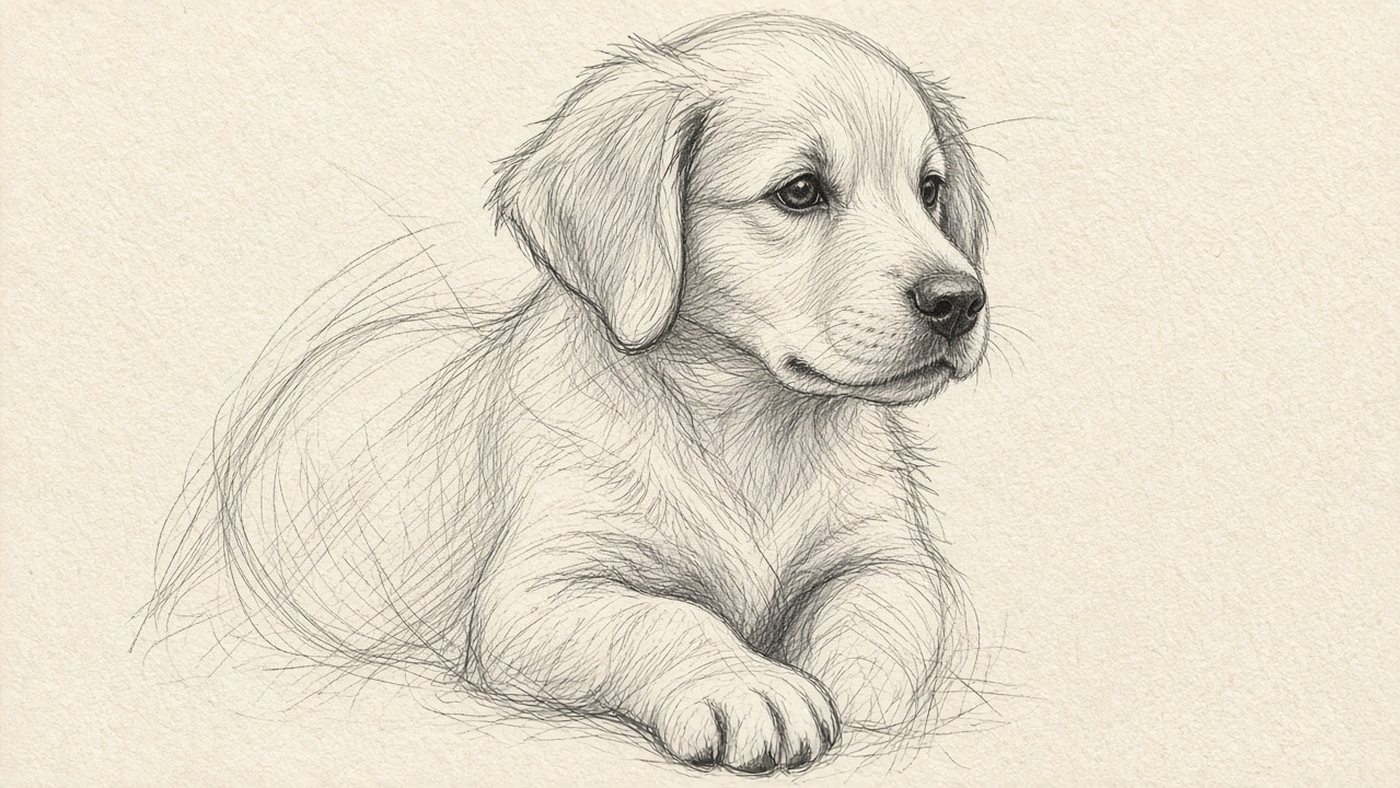
A dog stands on two volumes—the chest and pelvis—and cylinders for the legs. Until the frame holds, fur only hides a “sausage with legs.”
Chest and Pelvis
The chest is an oval, slightly wider at the shoulders; the pelvis is a smaller oval set farther back. A short lumbar cylinder connects them. In short-legged breeds the ovals sit closer; in hounds they are longer and lower. Compare with the build in how to draw a cat: a cat's pelvis is narrower, and a dog's chest is often heavier.
Legs as Cylinders
Each leg is three cylinders: upper arm or thigh, forearm or shin, and foot. Draw them first as sticks with circles at the joints, then round them out. The front legs carry weight; the back legs push—in a run the hind legs bend more. Volume basics are covered in drawing form and volume.
Muzzle and Ears
The muzzle is the length from the eyes to the nose and the width of the skull. Ears sit on the eye line or higher, depending on breed.
Snout Length vs Skull
Mark a circle for the skull and a wedge for the muzzle. On a pug the wedge is short; on a shepherd it is a long rectangle. The nose is a small block at the tip of the wedge; the eyes sit where wedge meets circle. In profile, long-muzzled breeds share one plane for forehead and muzzle; bulldogs pull the forehead back.
Ears by Breed
Prick ears are triangles from the upper third of the skull. Drop ears are long leaves attached above the eyes. Do not put ears “on the crown” for every breed—ears often identify the breed faster than coat color.
Leg Proportions
A dog's legs are longer than memory suggests: the wrist sits near the ground, but the elbow is high on the chest.

- Mark the chest and pelvis ovals and join them with the lower back.
- Place the head circle and muzzle wedge; mark the ears.
- Shoulder and hip circles on the edges of the body ovals.
- Drop leg cylinders to the “floor,” accounting for wrist and hock.
- Add the neck and tail along the line of the back.
- Fur last—as directional masses.
Wrist and Hock
On the front leg the elbow points backward; the wrist is a small break before the paw. On the hind leg the hock is often higher off the ground than the “human knee” habit suggests. Photograph the dog from the side: the angle of the hind leg at a stand surprises most beginners.
Legs in Motion
In a gallop all four feet leave the ground in turn; in a trot diagonal pairs work together. For a static drawing one phase is enough: one front foot forward and the opposite hind foot forward too. Do not align all legs parallel—a “post” pose looks dead.
Tip
Pick one medium breed (a mix or a Labrador) and three sketches: profile, three-quarter, sitting. Add breed extremes later, when the frame is automatic.
Fur Without Chaos
Fur is direction in masses and dark under the belly—not thousands of strokes from the first pencil.
Direction Masses
Split the body into zones: back, chest, legs, muzzle. In each zone strokes follow the form—from withers to tail, from neck to chest. Long coat reads as long arcs on the contours; short coat as short strokes only on bends and at the ears.
Dark Under the Belly
Light from above and the side leaves the chest and underside in half-shadow. That separates legs from the torso and adds volume without drawing every hair. For a still life with a bowl and a dog, the same light logic as in still life for beginners applies.
Practice
Lock in the frame with repetition and the right photo angle.
Three Sketches of One Dog
- standing in profile—check snout length and leg height;
- sitting three-quarter—link chest, legs, and ears;
- head large—eyes, nose, ears without fur.
Eye-Level Photos
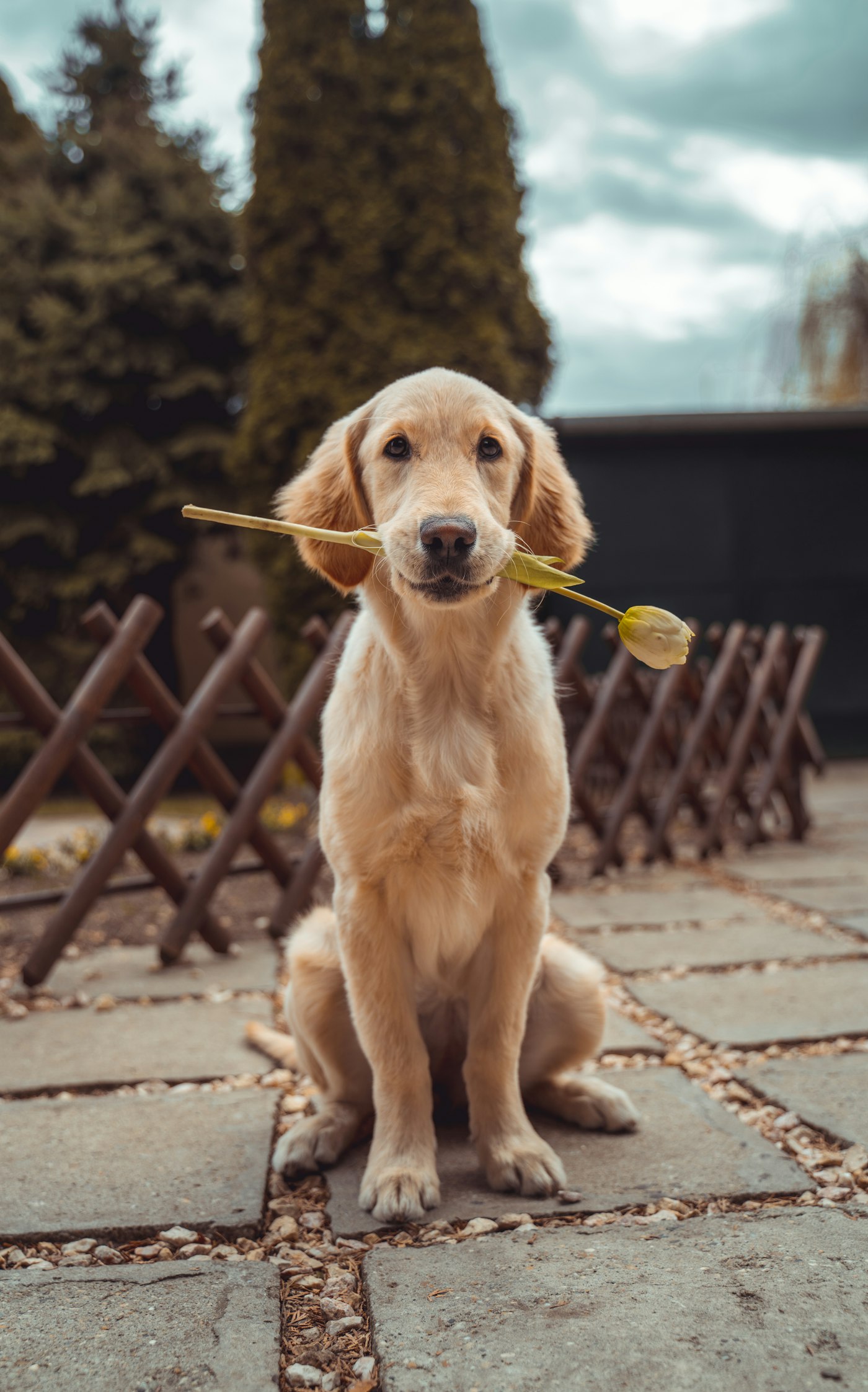
Shots from above squash the chest and lengthen the muzzle. The dog's eye level shows real proportions and leg breaks. If you draw from reference, align the body axis with the horizon line—easier to stay stable in perspective.
Time to draw, not just read
Theory fades in a couple of days if you never use it. Open the editor and spend 15 minutes on what you just read. That is enough for the skill to stick.
Try it now
A free online editor: brushes, layers, a palette, and a shared canvas. No install and no sign-up.
Start drawingTopics in this guide
- how to draw a dog
- drawing a dog
- dog anatomy drawing
- drawing dog fur
- dog drawing for beginners
← Still Life for Beginners: How to Set Up an Arrangement and Draw It How to Draw Birds: Silhouette, Beak, and Feathers →