Anatomy of Flame
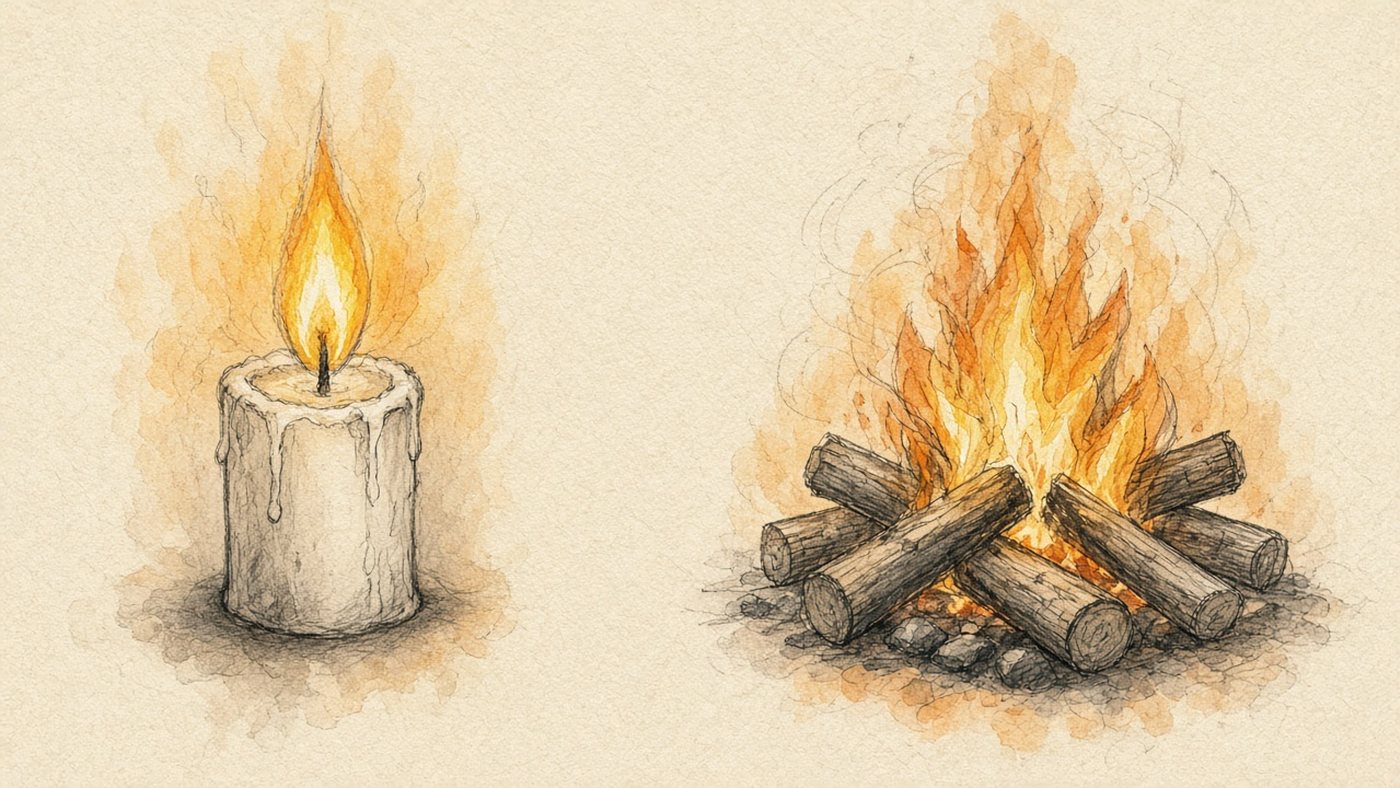
Flame is not an orange triangle—it is a shape with a base, body, and tongues, with a lighter center and darker edges.
Base, Body, and Tongues
The base is wide at the fuel (wick, log). The body rises as a teardrop or stretched oval. Tongues are short waves on the edge, asymmetric—live fire is not mirrored. Sketch three layers in pencil, then fill from center outward.
Cool Center, Warm Edge
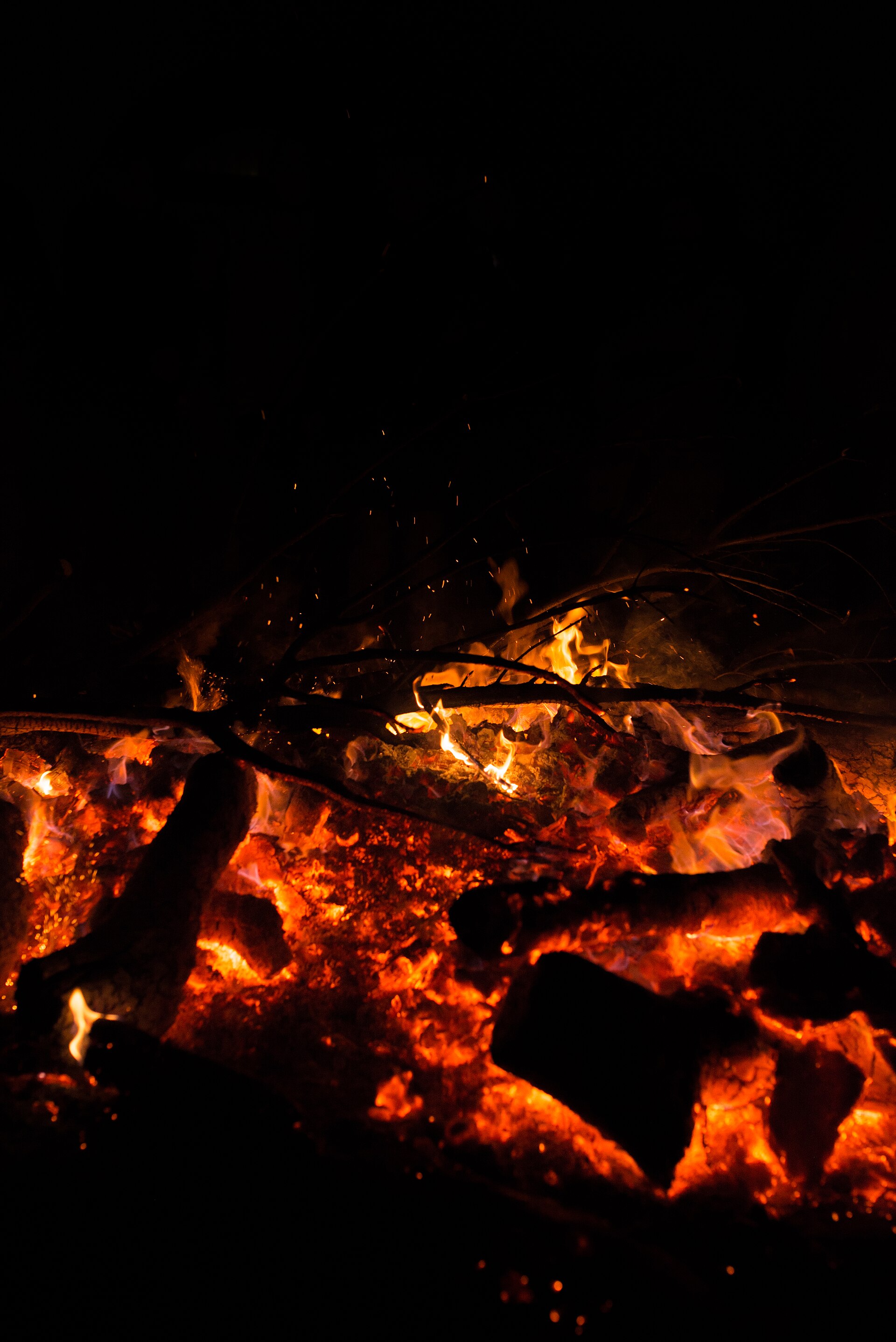
In real fire the center and top can go almost white or bluish; edges run yellow, orange, red; at the base, dark burgundy. Beginners use one orange everywhere—hence a \"flat campfire.\" Color temperature is covered more broadly in color theory.
Color and Gradient
Vertical gradient and transparency matter more than a texture brush.
White to Dark Red
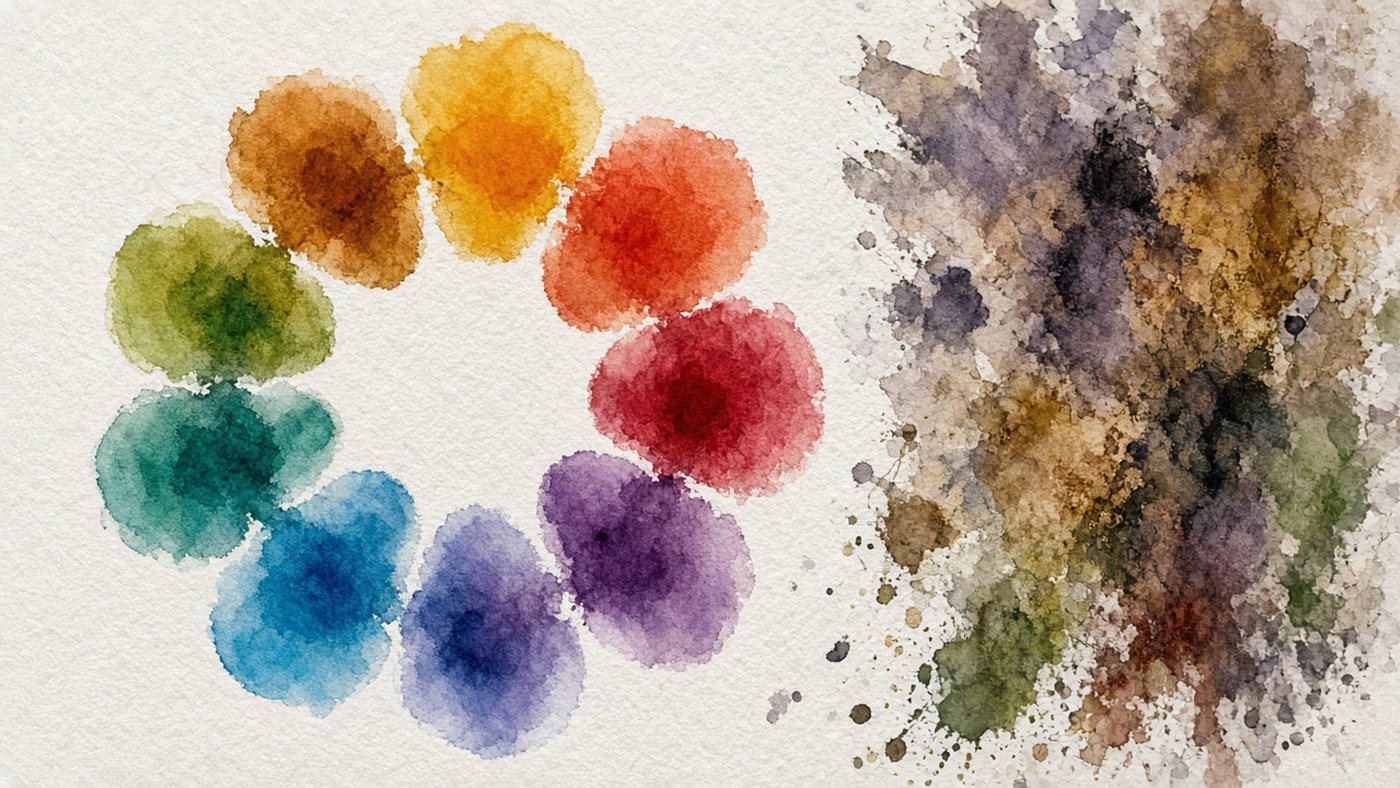
From top: white → lemon → orange → red → dark red at the root. Transitions stay soft, without a hard outline. On a tablet, a radial gradient or a blurred low-opacity stroke works well, layering 4–5 values.
Smoke as Transparency
Smoke is gray-violet patches at 10–30% opacity above the flame. It is not black: fire light reflects in it. Smoke edges are soft, shapes wavy—not one cone silhouette.
Blend Modes
Glowing objects in digital art are often built with Screen and Add on top of normal fill.
Screen and Add
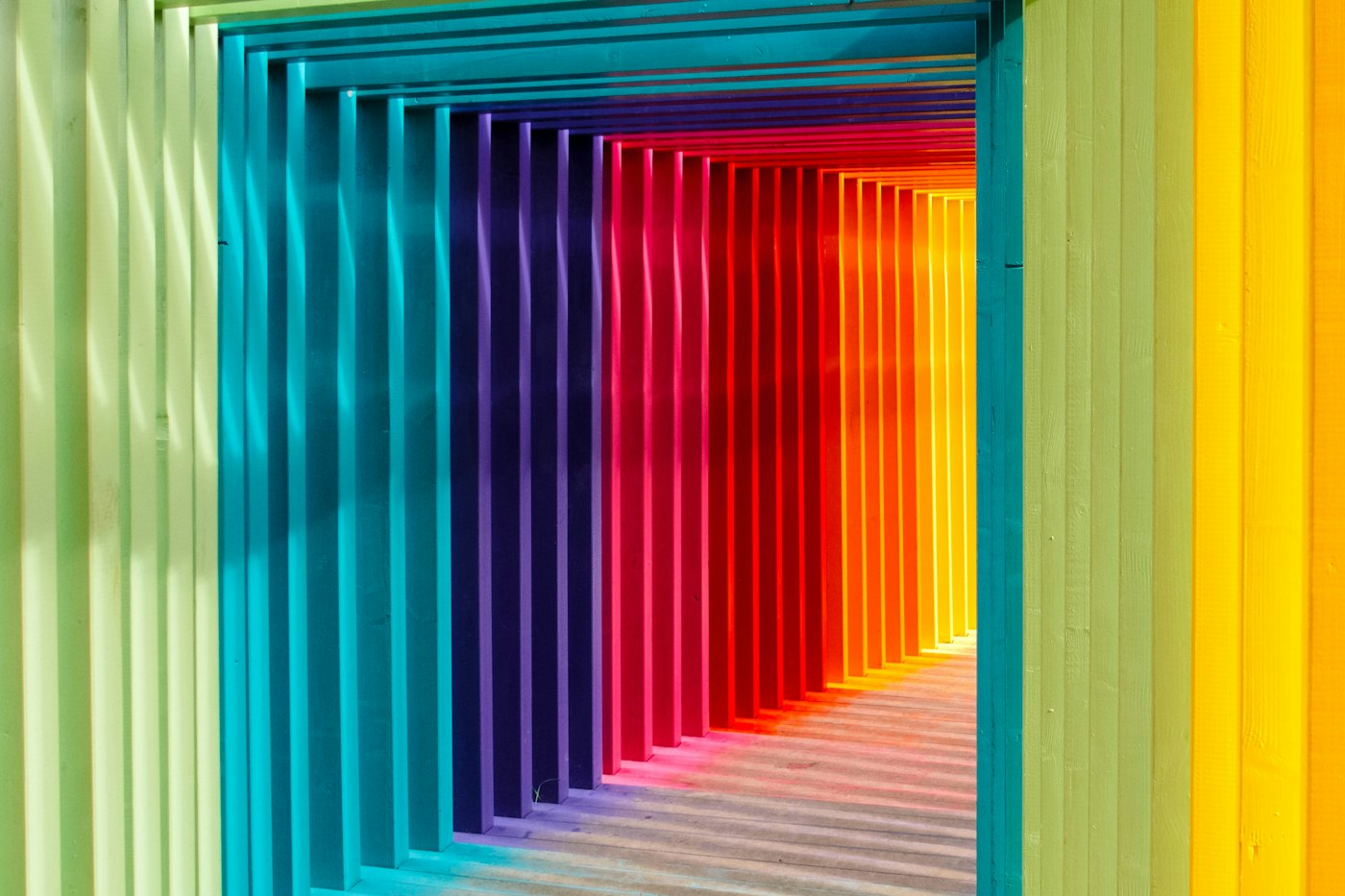
Screen lightens layers below; Add gives a brighter \"glow.\" A white or yellow stroke on its own layer in Screen is the classic move for flame tongues. Layer modes are covered in blend modes.
Don't Overdo Brightness
If the whole flame is on Add, the image \"burns out\" to a white blob. Keep one layer with normal fill for shape, one Screen for the halo, and Add only on tongues. Compare brightness to neighboring objects: fire should be brighter, but not the only white on the canvas.
Glow on Objects
The light source colors everything around—not just the flame itself.
- Background and objects in ordinary light and shadow.
- Flame: gradient + Screen layer.
- Halo around the source with a soft brush.
- Warm bounce on nearby surfaces.
- Cool shadow on the side opposite the fire.
Halo Around the Source
A soft yellow or orange patch around the flame, large brush, low opacity. The halo is wider than the tongues—that is how the eye reads \"emission.\"
Reflection on Nearby Surfaces
Face, hands, and metal near a campfire pick up warm undertone from below. Ground shadows shift cool blue or violet—temperature contrast. That logic overlaps with reflected light.
Tip
Draw a candle on a dark gray background: white center, yellow body, orange halo, blue shadow at the holder. Without a dark background, glow does not show.
Neon and Magical Light
Neon is outline plus soft glow; magical light often pairs saturated color with a dark surround.
Outline + Soft Halo
Text or symbol line—bright, almost white center; clean cyan, magenta, or lime at the edges. Under the contour, duplicate the shape blurred in the same color on Screen. Two layers beat one thick stroke.
Dark Background Required
- background #1a1a2e or deep purple, not pure black;
- objects with cool shadow so neon \"pops\";
- no more than two neon colors in one scene at first.
For pixel neon on a grid, see pixel art for beginners: outline and dithering replace a soft halo.
Time to draw, not just read
Theory fades in a couple of days if you never use it. Open the editor and spend 15 minutes on what you just read. That is enough for the skill to stick.
Try it now
A free online editor: brushes, layers, a palette, and a shared canvas. No install and no sign-up.
Start drawingTopics in this guide
- how to draw fire
- glow in drawing
- neon in drawing
- how to draw flame
- light effects drawing
← How to Draw Birds: Silhouette, Beak, and Feathers Isometric Drawing: Rooms and Objects at 30° →